
2026 Best Pulverizing Bowl for Global Buyers?

Choosing the 2026 best Pulverizing Bowl requires more than comparing price, capacity, or polished catalog images. Global buyers need evidence from actual grinding conditions. The bowl must match sample hardness, batch size, contamination limits, operating frequency, and cleaning expectations. A shiny bowl can still fail under abrasive minerals.

Market research supports this wider view. Grand View Research identifies continuing demand for advanced grinding and material-processing equipment, driven by mining, construction, chemicals, and laboratory testing. Mordor Intelligence also highlights automation, wear resistance, and process efficiency as important equipment trends through the decade. These reports do not rank individual Pulverizing Bowl models. They do show why buyers increasingly examine lifecycle performance instead of purchase cost alone.

Small details matter.

Dr. Alban J. Lynch, a respected mineral-processing specialist, wrote, “Comminution efficiency is the key to economic mineral processing.” His principle applies directly here. A bowl that wastes energy, produces uneven particles, or contaminates samples can damage the entire testing process. Material selection deserves close attention. Hardened steel offers durability, while tungsten carbide may suit highly abrasive samples. Ceramic options can reduce metallic contamination, but they may chip under careless handling.

Buyers should also verify ISO 9001 manufacturing controls, ASTM-related testing requirements, spare-part availability, and documented wear data. Supplier claims need independent checking. This is where many comparisons become weak. Laboratory experience, service records, and application trials often reveal more than brochures. The best Pulverizing Bowl is not universally the strongest model. It is the model that remains consistent, cleanable, serviceable, and financially sensible for a buyer’s specific workflow. That answer may feel less impressive, but it is more reliable.
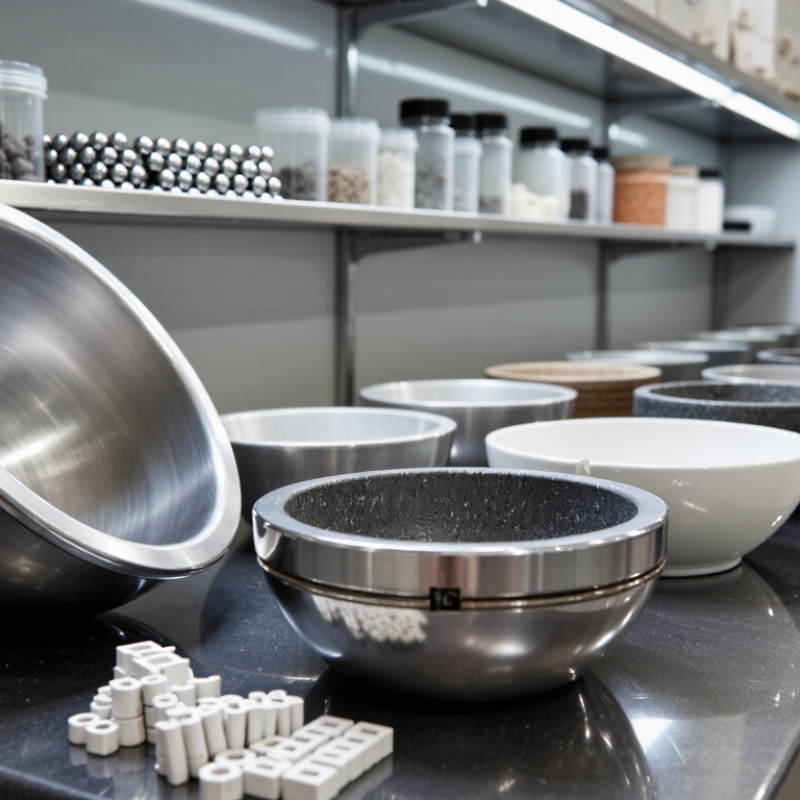
2026 Best Pulverizing Bowl for Global Buyers?

What Is a Pulverizing Bowl and How Is It Used?

A pulverizing bowl is a rigid grinding vessel used to reduce solid samples into a fine, uniform powder. It usually works inside a ring mill, disc mill, or similar laboratory pulverizer. The bowl holds the sample while a puck, ring, or grinding disc applies pressure and impact. Rock, soil, cement clinker, glass, and ceramic pieces are common materials.

The process begins with a clean, dry bowl. An operator adds a measured sample, closes the lid, and selects a suitable grinding cycle. The finished powder may then support chemical analysis, particle testing, or quality control. Do not overfill the bowl. Excess material can produce uneven results and unnecessary heat. Sample residue can also affect the next test.

Bowl material matters. Hardened steel suits many mineral samples, while tungsten carbide or other wear-resistant materials may reduce contamination in demanding work. Check the bowl’s volume, internal dimensions, maximum load, and compatibility with the mill. A small bench-top unit may need a different bowl from an industrial pulverizer.

Wear protective eyewear and suitable respiratory protection when fine dust is possible. Inspect the bowl for cracks, deep scoring, or a loose lid before use. In practice, results are not always neat. Moist samples may smear instead of pulverize, and hard inclusions can damage the vessel. Cleaning between batches is essential, although rushed cleaning remains a common source of unreliable data.

Key Types of Pulverizing Bowls for Different Materials

Choosing the right pulverizing bowl starts with the material, not the machine. Different samples need different bowl types, grinding forces, and lining materials. For hard minerals, a hardened steel bowl offers strong impact resistance and stable performance. Tungsten carbide bowls suit highly abrasive samples and fine laboratory preparation. However, they may introduce contamination if the sample is sensitive to metal particles.

For geological samples, ceramics or agate can provide cleaner results and smoother particle surfaces. Agate is suitable for softer minerals, chemicals, and trace analysis. It is not ideal for very hard materials. Zirconia bowls resist corrosion and reduce metallic contamination, making them useful for advanced analytical work. For polymers, pharmaceuticals, or heat-sensitive materials, a polymer-lined bowl can reduce friction and temperature rise. This choice needs careful testing because some linings wear faster than expected.

Tips: Match bowl hardness with sample hardness. Check the maximum feed size before ordering. Ask for contamination data and wear-test records. Clean the bowl between materials, especially after oily or colored samples. A practical trial is often more reliable than a specification sheet. I have seen buyers choose the hardest bowl available, then discover unexpected sample contamination. Cost, cleaning time, and replacement availability also matter for global purchasing. Always verify voltage, dimensions, shipping protection, and after-sales technical support with the supplier.

2026 Best Pulverizing Bowl for Global Buyers? - Key Types of Pulverizing Bowls for Different Materials

Material-selection guide for laboratory pulverizing, grinding, milling, and sample-preparation applications

Bowl Type / Construction Typical Materials Main Advantages Key Limitations Contamination Considerations Recommended Use Relative Cost Level
Hardened Steel Bowl Hard rocks, ores, minerals, slag, ceramics, glass, and construction materials High impact resistance; suitable for tough and abrasive samples; generally economical May rust if exposed to moisture; relatively high iron content can affect trace-element analysis Possible iron, chromium, nickel, or manganese transfer depending on alloy and wear conditions Routine geological, mining, cement, aggregate, and industrial quality-control work Low to medium
Stainless Steel Bowl Food ingredients, chemicals, minerals, fertilizers, pharmaceuticals, and general laboratory samples Good corrosion resistance; easy to clean; durable for wet or moderately aggressive materials Not ideal where metal-free analysis is required; may wear when processing very hard abrasives Iron, chromium, nickel, and other alloy elements may be introduced at low levels General-purpose laboratories and applications requiring frequent washing or corrosion resistance Medium
Tungsten Carbide Bowl Very hard minerals, cement clinker, ores, geological specimens, carbides, and abrasive materials Extremely high hardness and wear resistance; efficient pulverization of difficult samples Higher purchase cost; brittle compared with steel; unsuitable for some contamination-sensitive analyses Potential tungsten, carbon, cobalt, or binder-element contamination depending on construction High-throughput preparation of highly abrasive and hard samples where long wear life is important High
Agate Bowl Minerals, pharmaceuticals, pigments, powders, and samples requiring low-metal contamination Very low hardness-related metal contamination; chemically stable for many laboratory samples; smooth surface Brittle; unsuitable for heavy impact, oversized feed, or very hard coarse materials; limited capacity options Generally low metallic contamination, but silicon and mineral particles can be introduced through wear Small-batch analytical sample preparation and applications where sample purity is critical High
Alumina Ceramic Bowl Ceramics, oxides, pigments, electronic materials, chemicals, and moderately abrasive powders High hardness; good chemical resistance; suitable when metallic contamination must be minimized Brittle under shock; may chip if overloaded or used with large feed particles Possible aluminum or ceramic-particle transfer; usually lower metal contamination than steel Ceramic and powder laboratories, chemical processing, and non-ferrous analytical work Medium to high
Zirconia Bowl High-purity chemicals, electronic powders, pigments, advanced ceramics, and sensitive analytical samples High wear resistance; good chemical stability; very low contamination for many applications Costly; capacity may be limited; severe impact or improper loading can damage the bowl Possible zirconium-based particle transfer; usually avoids iron-based contamination High-purity research, advanced materials, pharmaceuticals, and trace-analysis sample preparation High
Silicon Nitride Bowl Hard ceramics, technical powders, electronic materials, and contamination-sensitive samples High hardness; good thermal-shock resistance; low density and low metallic contamination Premium cost; less common; compatibility with the pulverizer must be checked carefully Potential silicon or nitrogen-containing wear particles; normally avoids steel-derived elements Specialized research and high-purity powder processing High
Polyurethane-Lined Bowl Soft to medium-hard rocks, coal, soil, polymers, biological materials, and samples requiring reduced noise Low noise; reduced metallic contamination; good impact absorption; suitable for selected sensitive samples Can wear, swell, or degrade with strong solvents, heat, or sharp abrasive particles May introduce polymer fragments or organic extractables; verify chemical compatibility before use Noise-sensitive laboratories and samples where metal contamination is undesirable Medium to high
Hard-Faced or Wear-Resistant Alloy Bowl Highly abrasive ores, recycled materials, industrial minerals, and continuous quality-control samples Extended service life; strong resistance to abrasive wear; suitable for demanding production environments Alloy composition varies; higher hardness can increase brittleness; not intended for every analytical method Wear elements may include iron, chromium, nickel, cobalt, tungsten, or other alloy constituents Industrial laboratories prioritizing durability, throughput, and predictable maintenance intervals Medium to high
Selection factors: Match the bowl material with sample hardness, abrasiveness, moisture, chemical reactivity, required final particle size, acceptable contamination level, batch capacity, cleaning method, and pulverizer compatibility. Always follow the equipment manufacturer’s operating limits for feed size, load, speed, and processing time.

Materials, Designs, and Performance Features to Compare

Selecting the best pulverizing bowl requires more than comparing price and capacity.

Materials determine contamination, wear, and cleaning effort. Alumina handles many mineral samples, while zirconia suits applications requiring low metallic contamination.

Agate offers clean grinding but may fracture under heavy impact. Stainless steel is durable, though it can introduce iron into sensitive samples.

Design affects daily productivity. A rounded interior reduces trapped powder near the wall. A removable liner simplifies inspection. Match the bowl volume to the batch size, not the maximum advertised capacity.

Overfilling often produces uneven particles. Too little material increases impact noise and wear.

Shorter grinding cycles help control heat, but this point is easy to overlook.

Performance should be checked with real samples.

The U.S. Geological Survey reported approximately 4.1 billion metric tons of global cement production in 2024, showing the scale of abrasive mineral processing (USGS, Mineral Commodity Summaries 2025).

The International Energy Agency states that cement production creates nearly 7% of global energy-related and process CO2 emissions (IEA, Cement, 2023).

This supports choosing wear-resistant parts and efficient cycles, especially for high-throughput laboratories. Ask suppliers for particle-size distributions, service-life data, and cleaning validation.

Test contamination after repeated runs. One trial is not enough.

Noise, dust leakage, and awkward clamps may matter more than laboratory specifications.

Some published performance claims still need careful verification.

How Global Buyers Can Evaluate Size, Capacity, and Compatibility

2026 Best Pulverizing Bowl for Global Buyers?

Global buyers should evaluate the bowl as a working system, not a single container. Start with material volume, bulk density, and expected batch frequency. ISO 787-11 defines a method for measuring the apparent density of powders. This figure helps convert kilograms into usable volume. A 1-liter bowl may hold only 0.6 kilograms of a fluffy powder. Dense minerals behave differently.

Leave practical headroom. A bowl filled to its rim can reduce circulation and increase heat. Many operators begin with 60–70% working capacity, then adjust after testing.

It is not a universal rule. Moisture, particle shape, and feed speed can change the result. Measure the real batch. Do not trust catalog volume alone.

Compatibility requires equal attention.

Check bowl diameter, mounting geometry, drive power, clearance, and tool travel against the equipment drawing. ISO 3310-1 gives standardized sieve dimensions, but it does not guarantee machine compatibility. Material contact surfaces also matter.

The U.S. Pharmacopeia General Chapter <616> highlights controlled powder testing, including density-related handling concerns. For abrasive feed, inspect wear after several cycles.

For damp or reactive material, verify corrosion resistance and cleaning access. A polished surface looks reassuring, but surface finish alone cannot prove suitability. Trial testing remains necessary.

International Standards, Supplier Checks, and Purchasing Factors

Choosing the best pulverizing bowl in 2026 requires more than comparing prices. Global buyers should match bowl material, capacity, hardness, and compatibility with their pulverizer. Stainless steel may suit routine laboratory work, while ceramic or tungsten-based materials can reduce contamination in demanding tests. Always confirm dimensions and operating limits with the equipment manual.

International standards provide a useful purchasing framework. Request material certificates, inspection records, and clear batch traceability. A supplier should explain its quality system, dimensional controls, and testing methods. Certifications can support trust, but they do not replace independent verification. A polished website is not proof. In my experience, a small sample test often reveals poor fit, excessive noise, or unexpected residue. I have also seen buyers overlook packaging, then receive damaged bowls after long-distance transport. That mistake is avoidable, though not always obvious.

Tips: Ask for a drawing, sample photos, and a written tolerance range. Check resistance to abrasion, heat, and chemical exposure. Compare lead time, spare-part access, warranty terms, and inspection options. Confirm export documents and packing details before payment. Do not select the cheapest offer automatically. A lower purchase price may create higher replacement costs. One more point deserves reflection: “best” depends on the material being pulverized, test accuracy, cleaning routine, and expected workload. A bowl that performs well in one laboratory may fail in another. Suppliers should answer specific technical questions, not only send general brochures.

×
img

    Contact Info

    Phone number

    661-392-8948

    Address info

    3451 Pegasus Drive, Bakersfield, CA USA