 (780) 669-9420
2026 Top Bellows Valve Types for Global Buyers
The 2026 market for Bellows Valves is becoming more specialized as industries demand cleaner, safer, and more reliable fluid control. Global buyers now compare valve construction, bellows design, pressure ratings, materials, and lifecycle costs. A valve that performs well in a semiconductor facility may not suit a chemical processing line.
This guide examines leading valve types, including welded bellows valves, formed bellows valves, straight-through designs, angle-pattern valves, and multi-ply constructions. Each type offers different advantages for vacuum service, high-purity gases, corrosive media, steam, or high-temperature applications. Practical procurement reviews show that weld quality, stem alignment, seat performance, and factory testing often influence reliability more than catalog appearance. Small details matter.
Material selection also requires careful attention. Stainless steel may support clean service, while nickel alloys can offer stronger resistance in aggressive environments. Buyers should verify pressure-temperature charts, leakage classifications, actuator compatibility, spare-part availability, and documented quality procedures. International projects may also require recognized testing and certification records. No ranking is universally correct. A polished specification can still miss installation conditions, maintenance access, or local service capabilities. That is imperfect. The most suitable Bellows Valves depend on media properties, operating cycles, safety expectations, and the supplier’s technical support. This overview aims to help engineers, distributors, and procurement teams compare options with clearer evidence and fewer costly assumptions.
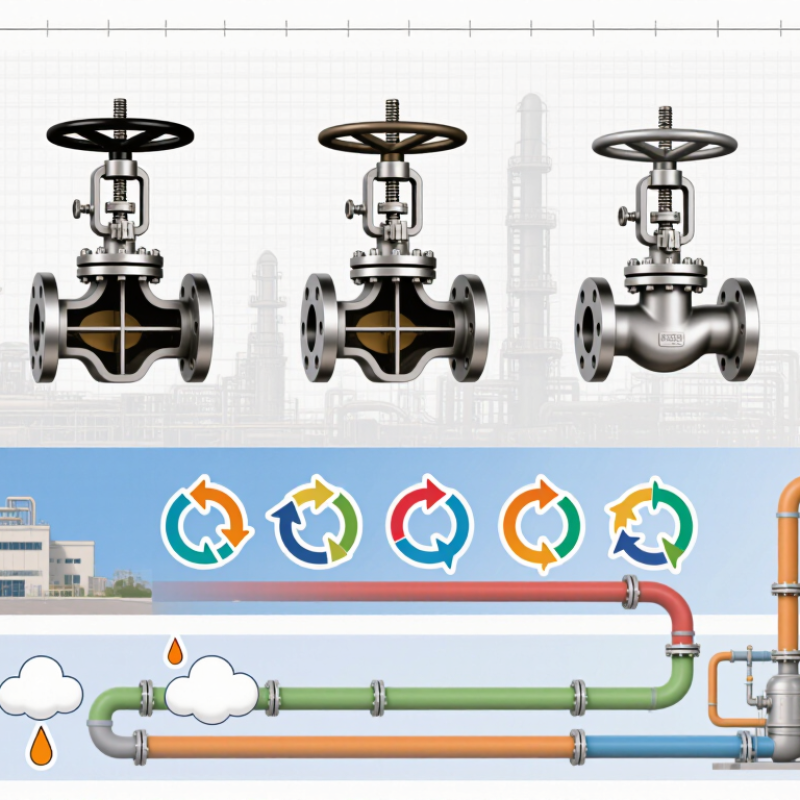
Bellows Valve Basics: Pressure Classes 150–2500 Under ASME B16.34
Bellows Valve Basics: Pressure Classes 150–2500 Under ASME B16.34
Bellows valves use a formed metal bellows to isolate the stem from the process fluid. This design helps control fugitive emissions in toxic, corrosive, or high-purity service. ASME B16.34 assigns pressure-temperature ratings by pressure class, material group, and operating temperature. Class 150 is not simply 150 psi. Its allowable pressure changes with temperature. The same principle applies to Classes 300, 600, 900, 1500, and 2500.
Higher classes normally require stronger bodies, thicker pressure boundaries, and more demanding testing. A Class 2500 valve may suit severe pressure service, but it can create higher cost and operating torque. Selection should match the actual temperature profile, fluid chemistry, connection type, and cycling frequency. A pressure class alone is insufficient.
Grand View Research reported that the global industrial valves market reached approximately 78.4 billion dollars in 2023. Its analysis also projects continued growth through 2030, supported by energy, chemical, and water infrastructure investment. This growth increases demand for documented, low-emission valve designs. Still, a bellows does not create zero risk. Repeated thermal cycles, vibration, and incorrect welding can cause fatigue. That detail is often underestimated. Buyers should request material certificates, pressure-temperature tables, bellows cycle data, and test records. Real specifications are rarely perfect at the first draft. Review them again before purchase.
2026 Top Bellows Valve Types for Global Buyers - Bellows Valve Basics: Pressure Classes 150–2500 Under ASME B16.34
Selection reference for hermetic stem-sealing valves used in hazardous, toxic, volatile, high-purity, and low-emission services.
| Bellows Valve Type | Primary Flow Function | Typical End Connections | Common ASME B16.34 Classes | Best-Suited Services | Key Selection Advantages | Main Limitations |
|---|---|---|---|---|---|---|
| Bellows-Sealed Globe Valve | Throttling, isolation, and moderate flow regulation | Flanged, butt-weld, socket-weld, or threaded ends, depending on size and class | 150 300 600 900 1500 2500 | Steam, hot oil, refrigerants, toxic gases, volatile organic compounds, and vacuum service | Good shutoff control, predictable flow characteristics, and reduced fugitive emissions from the stem area | Higher pressure loss than a full-port gate valve; bellows fatigue life must be checked for frequent cycling |
| Bellows-Sealed Gate Valve | Full-bore isolation with minimal pressure drop when fully open | Flanged or butt-weld ends; bolted or pressure-seal bonnet construction may be used | 150 300 600 900 1500 2500 | Process isolation, power generation, petrochemical lines, steam systems, and high-integrity shutoff duties | Low flow resistance and effective stem-emission control for isolation service | Not intended for routine throttling; slower operation and potential seat damage under high-velocity throttling |
| Bellows-Sealed Angle Valve | Isolation or throttling with a 90-degree change in flow direction | Flanged, butt-weld, or socket-weld ends | 150 300 600 900 1500 | High-temperature piping, drain systems, reactor lines, steam services, and compact layouts | Combines directional piping changes and valve duty; can simplify piping arrangements and improve drainage | Flow pattern and body geometry require careful review for erosion, cavitation, and pressure loss |
| Bellows-Sealed Check Valve | Automatic prevention of reverse flow | Flanged, butt-weld, socket-weld, or threaded ends, subject to design and size | 150 300 600 900 1500 2500 | Hydrocarbon, steam, toxic fluid, vacuum, and high-purity process systems requiring low-emission construction | Provides non-return functionality while isolating the moving stem or hinge area from the atmosphere | Requires correct orientation and velocity assessment; closing dynamics can create water hammer or pressure surge |
| Bellows-Sealed Control Valve | Continuous or automated flow, pressure, temperature, or level control | Flanged or butt-weld ends; actuator-mounted assemblies are common | 150 300 600 900 1500 | Emission-sensitive chemical processing, pharmaceutical production, gas handling, and utility control loops | Combines precise actuator control with improved stem-sealing integrity for regulated emissions service | Higher purchase and maintenance cost; sizing must account for cavitation, flashing, noise, and actuator forces |
| Bellows-Sealed Needle Valve | Fine metering, instrument isolation, and low-flow regulation | Threaded, socket-weld, or small-bore flanged ends | 150 300 600 900 1500 2500 | Sampling systems, analytical instruments, laboratory gas lines, high-purity service, and leak-sensitive small-bore piping | Accurate low-flow adjustment and strong protection against external stem leakage | Small flow capacity; susceptible to plugging or damage when used with dirty fluids or excessive differential pressure |
| Bellows-Sealed Piston Valve | Positive shutoff and controlled linear flow movement | Flanged, butt-weld, or socket-weld ends | 150 300 600 900 1500 | Steam, condensate, hot water, gas, and process services requiring repeatable shutoff | Guided closure member, compact construction, and reduced exposure of the stem sealing path | Internal clearances and sealing surfaces may be sensitive to contamination and thermal distortion |
| Bellows-Sealed Cryogenic Valve | Isolation or control of liquefied and very low-temperature fluids | Extended bonnet with flanged, butt-weld, or threaded connections, depending on design | 150 300 600 900 1500 | Liquid nitrogen, oxygen, argon, LNG-related systems, and other cryogenic or cold-box applications | Extended bonnet helps keep the stem packing and actuator area away from extreme cold; bellows support low-emission service | Requires material compatibility, oxygen-cleanliness controls where applicable, thermal-cycle analysis, and correct bonnet orientation |
Buyer checklist: Confirm the required pressure class, design temperature, body and trim materials, end standard, nominal pipe size, leakage specification, bellows cycle requirement, fire-safe or fugitive-emission requirements, actuator needs, inspection level, and applicable project standards before final selection. ASME B16.34 class availability can vary by valve design, size, material, and manufacturer.
