
Blog
- Home
- Blog
7 Tips to Choose the Right Single VSD Compressor?
Choosing the right Single Vsd Compressor affects energy use, air stability, maintenance effort, and production reliability. A poor match may run efficiently on paper but struggle during sudden demand changes. The sound of frequent loading and unloading often reveals this problem before a dashboard does.
This guide presents seven practical tips for evaluating compressor capacity, variable speed range, motor efficiency, air quality, controls, service support, and total ownership cost. It considers real operating details, such as a factory using several pneumatic tools at 6 to 8 bar. It also examines how dust, heat, humidity, and long daily running hours influence equipment performance. These conditions matter more than a simple catalog comparison.
Look beyond the purchase price. A technically suitable compressor should maintain stable pressure without constant intervention. Its controller should provide useful data, not confusing alarms. Local technicians should also have access to genuine parts and clear maintenance procedures. That support can determine whether a small fault lasts thirty minutes or several days.
Be careful with promised savings. Actual results depend on leakage, demand patterns, installation quality, and operator habits. I have seen systems lose efficiency because the receiver was undersized or the air network was poorly maintained. That mistake is easy to overlook. The following tips offer a reliable starting point, while leaving room for site measurements and independent verification. No single model fits every plant. The best decision connects measured demand with dependable engineering support.
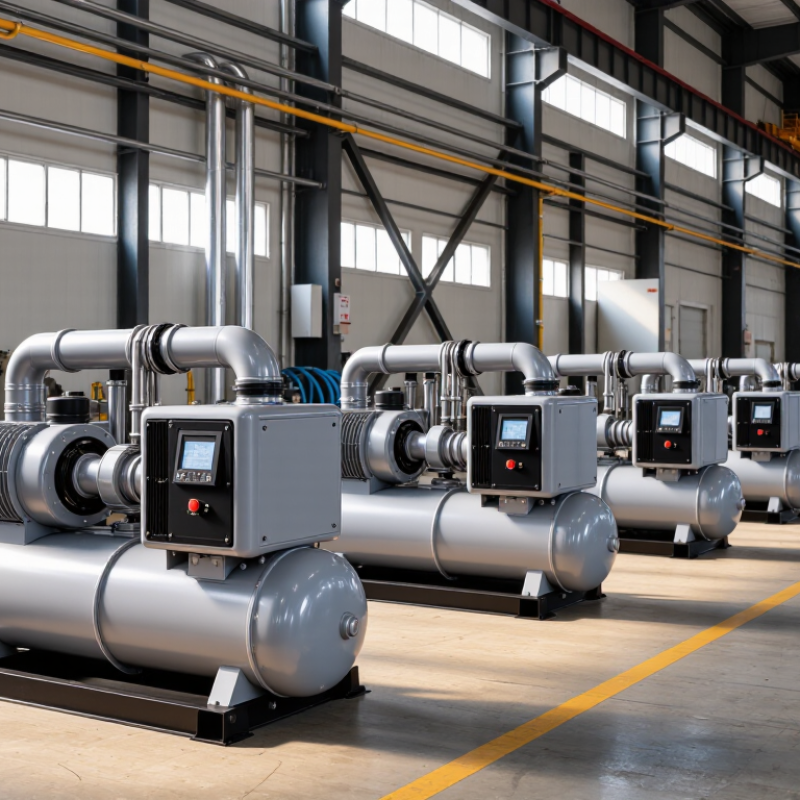
Understand How Single VSD Compressors Work
A VSD compressor changes motor speed to match the air demand. A pressure sensor measures system conditions continuously. The controller then adjusts the drive frequency and compressor speed. When production slows, the motor reduces speed instead of running fully loaded. Demand changes quickly. That matters.
When choosing a single VSD compressor, check the required pressure, average flow, peak flow, and daily operating hours. Select a unit that operates efficiently near your normal demand, not only at its maximum rating. Examine the motor, drive, cooling method, control range, and minimum stable speed. A wide control range can reduce waste, but it may not suit every installation.
Review the pressure sensor location and control response. A poorly positioned sensor can cause unnecessary speed changes. Confirm the compressor’s response during sudden tool starts or process shutdowns. Check the inlet filter, oil separator, and cooler because maintenance affects real performance. In field assessments, I have seen systems lose efficiency because filters were ignored, not because the compressor was incorrectly sized. It is an easy mistake.
Consider electrical capacity and installation conditions. The drive may create heat, and poor ventilation can shorten component life. Ask for measured performance data at your expected pressure and flow. Marketing figures alone are not enough. Also verify service access, alarm records, and restart behavior after power interruptions. A VSD is efficient, but it is not magic. Its savings depend on stable controls, realistic sizing, and disciplined maintenance.
Assess Your Required Airflow and Pressure Range
A single VSD compressor should match your real airflow demand, not an impressive estimate. Record production data during quiet shifts, peak output, and cleaning periods. Note the lowest and highest pressure readings near the equipment. A calibrated flow meter helps, but temporary measurements can still contain errors. Check the data twice.
Airflow is usually stated in cubic feet per minute or cubic metres per minute. Pressure may be shown in bar or psi. Convert all readings into consistent units before comparing compressors. Include air leaks, pipe friction, filters, dryers, and future equipment. A small pressure drop across a blocked filter can change the selection. Do not size the compressor only for the largest machine. That can create unnecessary energy use during lighter demand.
The VSD system should operate efficiently across your normal load range. Ask whether its control range covers your minimum and maximum airflow without unstable cycling. Leave a practical pressure margin, but avoid adding an excessive buffer. I once saw a compressor selected from a peak reading caused by a short cleaning event. The machine was technically capable, yet poorly matched for daily production. Review a full week of readings when possible. A qualified technician can verify the figures, inspect the installation, and challenge assumptions before purchase.
7 Tips to Choose the Right Single VSD Compressor: Assess Your Required Airflow and Pressure Range
Compare the typical airflow requirement and operating pressure for common compressed-air applications. Select a compressor that can meet the highest expected demand without operating continuously at its maximum capacity.
Match Compressor Capacity to Your Operating Profile
7 Tips to Choose the Right Single VSD Compressor
Match Compressor Capacity to Your Operating Profile
Measure actual demand before selecting capacity. Record flow, pressure, shifts, weekends, and short production peaks. A single VSD compressor should follow your load, not an assumed maximum. The U.S. Department of Energy reports that compressed air can consume 10% or more of industrial electricity. Oversizing can therefore create expensive, lightly loaded running hours. Start with an audited demand profile. Small errors matter.
Check seven practical points: minimum flow, maximum flow, average flow, pressure stability, operating hours, receiver volume, and air quality. VSD control helps during changing demand, but it cannot fix poor sizing. The DOE’s Improving Compressed Air System Performance sourcebook notes that leaks commonly waste 20–30% of compressor output. I have seen pressure settings raised to hide leaks. That approach increases energy use without adding useful capacity. Repair the network before increasing compressor size.
Compare the compressor’s turndown range with your lowest normal demand. If night demand is only 25% of peak flow, confirm stable operation at that point. Review specific power, measured in kilowatts per cubic metre per minute, across the expected load range. ISO 11011 recommends evaluating compressed air systems through measurement, analysis, and improvement. Ask for test conditions, not just catalogue ratings. Include dryer losses, filter pressure drop, cooling requirements, and maintenance access. A modest receiver may smooth rapid changes, although its volume should reflect cycling and control response. My own calculation would be challenged by seasonal demand; production data should be checked again after installation.
Compare Energy Efficiency, Controls, and Maintenance Needs
Choosing the right single VSD compressor starts with your actual air demand, not the advertised motor size. Record pressure, flow, operating hours, and load changes across several days. A compressor running lightly for long periods may waste energy despite its efficient motor. Compare specific energy consumption, measured in kilowatts per cubic metre, at your normal working pressure. Also inspect leaks around hoses, joints, and unused outlets. Small leaks can quietly consume substantial power.
Controls deserve equal attention. Select a VSD system that responds smoothly to changing demand without frequent pressure swings. Check whether it supports remote monitoring, alarm history, pressure adjustment, and clear energy data. Simple controls are often easier for operators to use. However, overly basic controls may hide inefficient cycling or abnormal temperatures. Test the response during shift changes and sudden production stops. A specification sheet cannot show every real operating condition.
Maintenance requirements can decide long-term value. Compare filter access, oil replacement intervals, cooling-air pathways, service indicators, and spare-part availability. Ask how technicians will reach the compressor in its installed location. A clean, accessible layout reduces downtime. Keep a maintenance log with temperatures, vibration, pressure, and energy readings. Trends matter more than one inspection. I have seen well-sized systems underperform because filters were ignored. My own judgment can also be wrong when demand data is incomplete, so leave room for a short trial and review the results before final selection.
Evaluate Installation Conditions, Costs, and Supplier Support
Tip 1: Map the air demand before selecting a single VSD compressor. Record pressure, flow, shift patterns, and peak loads for several days.
Tip 2: Check the installation space carefully. Leave room for cooling air, filter replacement, maintenance access, and safe electrical isolation. A cramped room can raise discharge temperature and shorten service life.
Tip 3: Confirm power quality and ventilation. A VSD may require stable voltage, clean air, and controlled ambient temperatures. The U.S. Department of Energy’s Improving Compressed Air System Performance sourcebook notes that compressed air can consume 10–15% of industrial electricity.
Tip 4: Compare total cost, not only purchase price. Include electricity, filters, oil, servicing, dryer demand, and planned downtime. DOE guidance also indicates that compressed-air leaks can waste 20–30% of compressor output. Fixing leaks may deliver better savings than buying a larger machine.
Tip 5: Test the payback model against real operating data. VSD savings decline when demand stays near full load. That detail is often missed.
Tip 6: Ask whether one compressor provides enough resilience. A single unit may have an attractive footprint, but one failure can stop production. Consider emergency rental access or a backup connection.
Tip 7: Examine supplier support before signing. Request commissioning records, response times, spare-parts availability, remote diagnostics, and technician qualifications. ISO 11011 recommends measuring compressed-air system performance, not relying on estimates alone.
A supplier may promise excellent efficiency. Ask for test conditions, sound levels, and guaranteed performance. Then challenge your own assumptions. The cheapest quote is rarely the lowest operating cost.
| No. | Evaluation Tip | What to Check | Practical Data or Target | Why It Matters | Recommended Evidence |
|---|---|---|---|---|---|
| 1 | Match the compressor to the real air demand | Review the minimum, average, peak, and operating hours of compressed-air demand. Avoid sizing only from the connected load. | Record a 7-day demand profile where possible. Select a VSD unit whose efficient control range covers the normal load rather than only the short-term peak. | A VSD compressor can reduce unloaded running and pressure fluctuation when demand varies, but an incorrectly sized unit may operate near its inefficient low-load limit or fail to meet peak demand. | Flow meter data, pressure-logger records, shift schedules, and a load profile showing minimum, average, and maximum demand. |
| 2 | Verify pressure and air-quality requirements | Confirm required pressure at the point of use, pressure losses in the distribution system, and the required oil, moisture, and particle quality. | Common plant-air systems operate around 7–10 bar(g), but the correct set point must be based on the application. Specify the required ISO 8573-1 air-quality class and dryer pressure-dew-point requirement. | Higher discharge pressure generally increases energy consumption. A compressor alone cannot guarantee clean or dry air without correctly selected filtration, separation, and drying equipment. | Process specifications, pressure measurements at the farthest user, air-quality classification, and a complete compressor–dryer–filter proposal. |
| 3 | Evaluate the installation environment | Check ambient temperature, altitude, ventilation, dust, humidity, available floor space, access clearance, noise limits, and electrical supply. | Confirm the unit's rated ambient-temperature and altitude limits. Provide adequate cooling-air intake and hot-air discharge, and keep service access clear according to the installation manual. | High ambient temperature, restricted airflow, dust, or an unsuitable electrical supply can reduce capacity, shorten component life, and cause protective shutdowns. | Site survey, room-layout drawing, ventilation calculation, electrical single-line diagram, and written confirmation of operating limits. |
| 4 | Compare energy performance using specific power | Compare input power against delivered free air delivery at the same pressure, including the VSD, motor, and compressor package. | Use specific power in kW per m³/min or kW per 100 cfm. Compare test conditions, rated pressure, measurement method, and whether auxiliary equipment is included. | Electricity is usually the largest part of compressor life-cycle cost. A lower purchase price can be offset by higher energy consumption over several operating years. | ISO 1217 performance data or an equivalent independent test report, guaranteed flow and power values, and a load-weighted energy model. |
| 5 | Calculate total cost of ownership | Include purchase price, installation, electrical work, ventilation, dryer and filters, maintenance, consumables, downtime, and electricity. | Annual energy cost = average input power × annual operating hours × electricity tariff. Simple payback = additional investment ÷ annual operating-cost saving. | The lowest quoted price does not necessarily provide the lowest cost over the equipment life. Use the same demand profile and tariff assumptions for every quotation. | Five- to ten-year cost model, itemized quotation, maintenance schedule, spare-parts pricing, warranty terms, and documented energy assumptions. |
| 6 | Check electrical compatibility and control functions | Verify voltage, frequency, short-circuit rating, harmonics, motor-cable requirements, starting current, communications, and remote-control interfaces. | Confirm compatibility with the site's nominal electrical supply and control system. Review harmonic limits and power-quality requirements with the electrical engineer. | A VSD changes the electrical and control characteristics of the package. Poor integration can cause nuisance trips, interference, overheating, or process-control problems. | Electrical datasheet, harmonic assessment where required, protection-coordination review, communication protocol list, and functional test plan. |
| 7 | Assess supplier support and service capability | Evaluate commissioning, technician availability, preventive maintenance, spare-parts access, remote monitoring, training, warranty response, and emergency support. | Set measurable service requirements, such as response time, parts lead time, commissioning scope, training hours, and guaranteed availability of critical consumables. | Fast technical support and planned maintenance reduce production risk, especially when the compressor is a single point of failure. | Service-level agreement, local service coverage, escalation procedure, spare-parts list, reference installations, and commissioning acceptance criteria. |
(780) 669-9420