
Blog
- Home
- Blog
How to Adjust Pop Up Sprinklers for Even Coverage?
Even a small spray-pattern error can leave brown grass beside saturated soil. Adjusting Pop Up Sprinklers helps distribute water more evenly, reduce runoff, and protect plant health. The task sounds simple, but nozzle choice, water pressure, spacing, and wind all influence performance.
The U.S. Environmental Protection Agency’s WaterSense program reports that outdoor water use can represent more than 30% of household water consumption. In dry regions, that share may reach 60%. These figures explain why sprinkler adjustment deserves careful attention, rather than quick visual guesses. The Irrigation Association also emphasizes matched precipitation and proper system scheduling as key practices for efficient landscape irrigation. A rotating nozzle and fixed spray nozzle may deliver water at very different rates, even within the same zone.
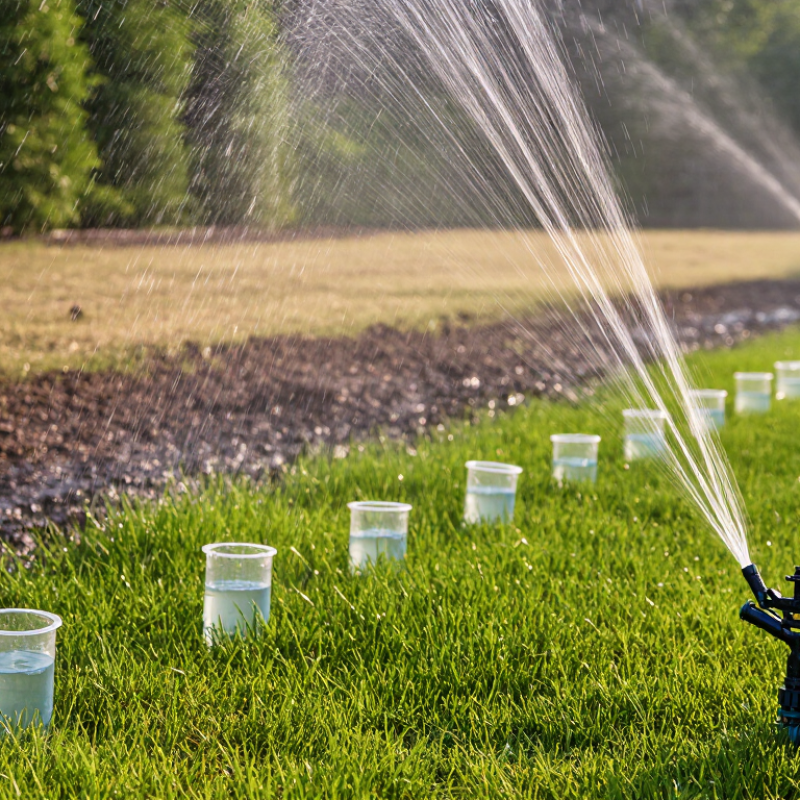
Look closely at the lawn after one cycle. Is the soil near the sprinkler muddy while the far edge remains dusty? That pattern often indicates poor head-to-head coverage, clogged nozzles, incorrect arc settings, or excessive pressure. A flat-blade screwdriver, pressure gauge, and catch-can test can reveal problems that casual inspection misses. Place identical cans across the zone, run the system, and compare water depths. The results may be uneven.
Perfect uniformity is not always realistic. Wind changes quickly, and mature shrubs can block spray paths. Still, measured adjustments usually outperform guesswork. This guide explains how to inspect, rotate, and fine-tune pop-up sprinkler heads, while recognizing when a nozzle replacement or professional irrigation assessment is the more reliable choice.
Identify Sprinkler Types, Nozzle Patterns, and Manufacturer Specifications
How to Adjust Pop Up Sprinklers for Even Coverage?
Identify the sprinkler type before changing its setting. Fixed spray heads throw a fan-shaped pattern, while rotary heads distribute narrow streams over longer distances. Adjustable arc heads cover selected angles, not full circles. The Irrigation Association recommends head-to-head coverage, meaning each spray should reach the next sprinkler. Measure the actual distance with a tape, not by guessing.
Nozzle pattern matters. A quarter-circle nozzle belongs in a corner, while a half-circle nozzle suits an edge. Full-circle nozzles work best in open lawn areas. Check the manufacturer’s flow rate, operating pressure, radius, and precipitation-rate data. A mismatched nozzle can create dry stripes beside soggy patches. It happens easily. WaterSense technical guidance identifies pressure regulation as important for reducing misting and improving spray performance; its labeled irrigation products must demonstrate measurable efficiency improvements, commonly around 20 percent compared with conventional options.
Adjust the arc with the correct tool, then test each zone for ten minutes. Place shallow cans across the lawn and compare water depth. The Irrigation Association’s audit practices use catch-can measurements to evaluate distribution uniformity, rather than relying on visual appearance alone. If one can collects half as much water, inspect pressure, clogged filters, tilted heads, and nozzle wear. My own field checks often reveal a second problem: trees or edging block the spray. Repositioning may outperform repeated adjustment. Manufacturer charts are useful, but site conditions still require judgment.
Check Pressure: Set Spray Heads Near 20–30 PSI and Rotors Near 30–50 PSI
Evenly watered grass begins with the correct pressure, not with endless nozzle adjustments. Spray heads usually perform best near 20–30 PSI, while rotors commonly need 30–50 PSI. A pressure gauge attached at the zone connection gives a more dependable reading than guessing from the spray pattern.
Run one zone at a time and measure pressure while the system operates. Static pressure can look healthy, yet working pressure may fall sharply when several heads run together. If spray heads mist, fog, or produce weak streams, pressure may be too high or too low. A regulator can reduce excessive pressure, while opening fewer zones may help recover low pressure. Small changes matter.
I learned this the hard way. Increasing flow did not fix my uneven coverage because the supply line was undersized. Check the irrigation plan, valve condition, and head spacing before changing every nozzle. For spray heads, adjust toward 20–30 PSI. For rotors, stay near 30–50 PSI unless the component’s technical data specifies another range. Pressure should be tested with clean filters and no damaged heads. Watch the soil after watering. Dry strips between arcs often reveal spacing problems, not pressure problems. One overlooked detail: wind can distort coverage even when the gauge reads perfectly.
How to Adjust Pop-Up Sprinklers for Even Coverage? — Check Pressure: Set Spray Heads Near 20–30 PSI and Rotors Near 30–50 PSI
| Adjustment Area | Recommended Setting or Check | What to Look For | Correction for Uneven Coverage |
|---|---|---|---|
| Spray-head pressure | Approximately 20–30 PSI during operation | Misting, distorted spray pattern, or weak throw may indicate excessive or insufficient pressure. | Use a pressure regulator where needed, inspect the supply line, and clean blocked nozzles before changing the adjustment. |
| Rotor pressure | Approximately 30–50 PSI during operation | Slow rotation, reduced radius, or excessive misting can signal a pressure problem. | Measure pressure while the zone is running and correct restrictions, leaks, or excessive demand on the zone. |
| Head-to-head spacing | Place adjacent heads so each head’s wetted radius reaches the next head. | Dry strips between sprinkler heads or greener areas near individual heads. | Relocate or add heads where spacing is too wide; avoid compensating for poor layout by increasing pressure. |
| Spray arc or rotor arc | Set the arc to match the irrigated shape: quarter, half, or full circle as appropriate. | Water reaching sidewalks, driveways, walls, or other non-landscape areas. | Reduce the arc or realign the fixed side of the spray pattern to keep water within the planting area. |
| Spray radius | Adjust only enough to achieve the required overlap and boundary coverage. | Short radius causes dry edges; excessive radius causes runoff or overspray. | Fine-tune the radius after pressure is stable, then verify coverage at the edges of the zone. |
| Nozzle condition | Inspect for dirt, mineral deposits, cracks, or a loose nozzle. | Uneven streams, missing sections of spray, or a visibly irregular pattern. | Shut off the system, clean the nozzle and filter, and replace damaged parts with the correct flow and pattern type. |
| Head alignment and height | Keep the sprinkler vertical and level with the finished soil or turf surface. | A tilted head creates a lopsided pattern; a buried head may be blocked by soil or grass. | Reset the body vertically, clear surrounding debris, and protect the head from mower or foot traffic. |
| Wind and operating time | Check the pattern during normal watering conditions and use shorter cycles on compacted or sloped soil. | Wind drift, puddling, or runoff despite an apparently correct spray pattern. | Water during calmer periods, use cycle-and-soak scheduling, and correct the pattern before increasing run time. |
Adjust Arc and Radius to Keep Head-to-Head Coverage Across the Lawn
Even coverage begins with head-to-head spacing. Each pop-up sprinkler should reach the next head, not merely wet the nearest patch. The Irrigation Association’s landscape irrigation guidance recommends this pattern because overlapping precipitation reduces dry zones and lawn striping. Walk the system while it runs. Mark dry corners with small flags.
Adjust the arc before changing the radius. Set quarter-circle heads near corners, half-circle heads along edges, and full-circle heads in open areas. A small arc error can throw water onto sidewalks. That wastes water and leaves turf thirsty. Turn the adjustment screw slowly, then observe one complete cycle. Keep the spray away from walls and paving.
Next, reduce or increase the radius until streams meet the neighboring head. The U.S. Environmental Protection Agency reports that landscape irrigation uses nearly one-third of residential water, or about 9 billion gallons daily. Better overlap can reduce unnecessary runtime. Still, perfect coverage is not automatic. Wind, slope, clogged nozzles, and settling soil change the pattern. I check the lawn after mowing and after heavy rain. Sometimes my first setting looks correct, but a dry crescent appears the next morning. Rotate the head, clean its filter, or adjust the arc again. Tiny changes matter.
Match Precipitation Rates Within Each Irrigation Zone for Uniform Watering
Adjusting pop-up sprinklers is not only about spray distance. Each head must deliver water at a similar rate within the same irrigation zone. EPA WaterSense reports that outdoor irrigation can account for nearly 30% of household water use, while inefficient watering may waste about 50%. Matched precipitation is a practical way to reduce that loss.
Place several shallow cans across the zone. Run the sprinklers for ten minutes, then compare the collected depth. A dry corner often signals poor arc adjustment, blocked nozzles, or excessive spacing. If one area receives twice as much water, changing only the runtime will not fix the imbalance. Replace mismatched nozzle types, and adjust each spray pattern until the water reaches the intended boundary.
Keep the pressure steady. Low pressure creates weak streams, while high pressure causes misting and wind drift. The Irrigation Association recommends evaluating distribution uniformity rather than trusting visual appearance alone. That matters.
I usually check the cans twice. The first reading can mislead me. Wind, sloping ground, and uneven soil change the result. After adjustment, repeat the test during calm weather. A small dry patch may still appear, but consistent precipitation rates should prevent puddles and brown stripes. EPA WaterSense also advises scheduling irrigation according to soil, weather, and plant needs, not a fixed calendar.
Measure Catch-Can Output and Target About 25–35 mm of Water Weekly
How to Adjust Pop Up Sprinklers for Even Coverage?
Place straight-sided catch cans across the lawn before adjusting your pop-up sprinklers. Use several cans, not just one. Put them near the sprinkler heads, halfway between heads, and along dry-looking edges. Run the system for 15 minutes, then measure the water depth in each container with a ruler. Record every result.
Aim for an average of about 25–35 mm of water weekly during active growth. This is a practical starting range, not a fixed rule. Sandy soil, strong wind, shade, and recent rainfall can change the amount needed. Divide the weekly target across several watering sessions. Frequent, shorter cycles may reduce runoff on sloped ground.
Check the catch-can average after each adjustment. If one area collects 10 mm while another receives 4 mm, inspect the spray pattern, arc, and distance. Turn the adjustment screw carefully, or reposition the head if water misses the grass. Avoid increasing runtime to solve poor coverage. That often creates puddles elsewhere. I usually test again after cleaning blocked nozzles, because a small obstruction can distort the pattern. My first reading is rarely perfect. Measure on a calm morning when possible, and keep a simple record of rainfall and irrigation time. A 30 mm weekly target may be excessive after heavy rain, while hot, exposed turf may need closer monitoring.
(780) 669-9420