Top 10 Benefits of Cast Steel Valves for Industrial Applications

The industrial sector has witnessed significant advancements in valve technology, with cast steel valves emerging as a crucial element in numerous applications. According to a report by MarketsandMarkets, the global valve market is expected to reach USD 93.24 billion by 2025, reflecting the increasing demand for high-quality valves in various industries such as oil and gas, water and wastewater, and power generation. Cast steel valves are particularly favored due to their robust construction and ability to withstand high pressures and temperatures, making them suitable for critical operations in demanding environments.

The advantages of cast steel valves extend beyond their physical properties; they also contribute to enhanced operational efficiency and reduced maintenance costs. A study published by the International Journal of Pressure Vessels and Piping highlights that cast steel valves offer superior durability and longevity compared to other materials, resulting in a lower total cost of ownership. As industries continue to focus on sustainability and cost-effectiveness, the demand for cast steel valves is anticipated to grow, driving innovations in valve design and functionality. In this context, understanding the top benefits of cast steel valves is essential for engineers and decision-makers looking to optimize their industrial processes.

Top 10 Benefits of Cast Steel Valves for Industrial Applications

Advantages of Cast Steel Valves in Industrial Settings

In industrial settings, the use of cast steel valves has gained substantial traction due to their robust performance and reliability. According to a report published by the Valves and Actuators Market Research Group, the demand for cast steel valves is projected to grow at a compound annual growth rate (CAGR) of 5.4% from 2021 to 2026. This growth can be attributed to their excellent durability and resistance to extreme temperature and pressure conditions, making them suitable for a wide range of applications, including oil and gas, water treatment, and chemical processes.

One of the key advantages of cast steel valves is their superior strength compared to other valve materials. This strength allows for efficient pressure handling, often exceeding 18,000 psi, which is essential for high-pressure industrial processes. Furthermore, cast steel valves often come equipped with advanced sealing technologies that minimize the risk of leaks, significantly enhancing operational safety and reducing maintenance costs. A study by the International Journal of Industrial Engineering indicated that implementing cast steel valves in critical systems has led to a 30% reduction in failure rates, underscoring their essential role in maintaining system integrity and operational efficiency in various industrial applications.
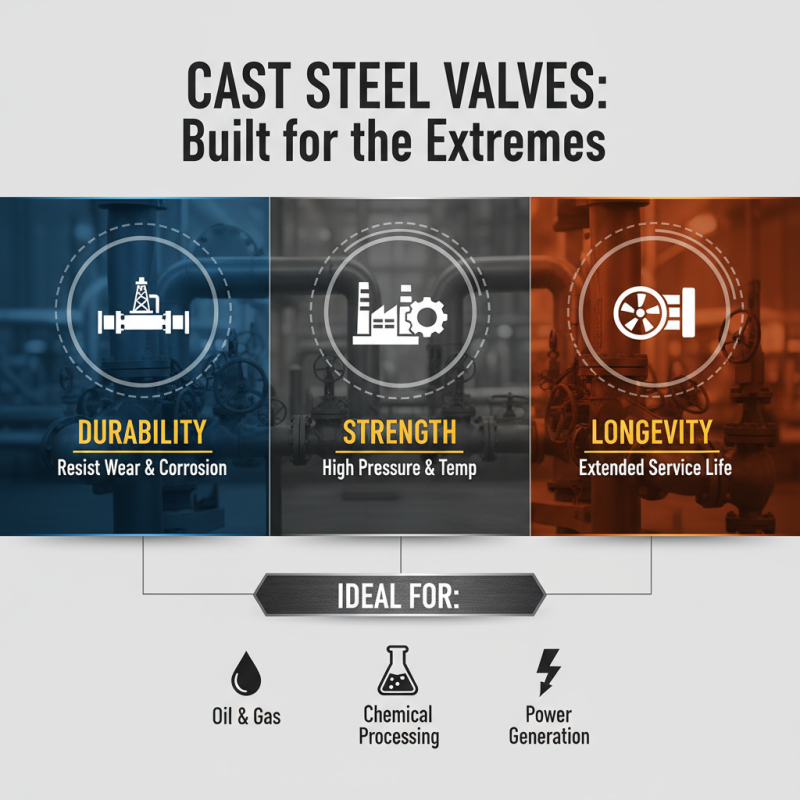
Durability and Strength: Key Features of Cast Steel Valves

Top 10 Benefits of Cast Steel Valves for Industrial Applications

Cast steel valves have gained significant popularity in various industrial applications primarily due to their exceptional durability and strength. These valves are typically crafted from high-quality steel that can withstand extreme pressures and temperatures, making them ideal for demanding environments such as oil and gas, chemical processing, and power generation. The inherent strength of cast steel allows these valves to resist wear and corrosion better than many other materials, significantly extending their service life and reducing the need for frequent replacements.

Furthermore, the manufacturing process of cast steel valves contributes to their robust nature. Techniques such as casting ensure a uniform structure, which enhances strength and minimizes the possibility of defects. This uniformity is crucial in maintaining consistent performance under varying operational conditions. Additionally, cast steel valves are designed to handle a wide range of flow rates, making them versatile components in complex systems. Their reliability and resilience not only boost operational efficiency but also improve safety in industrial processes, where equipment failure can lead to costly downtimes and potential hazards.

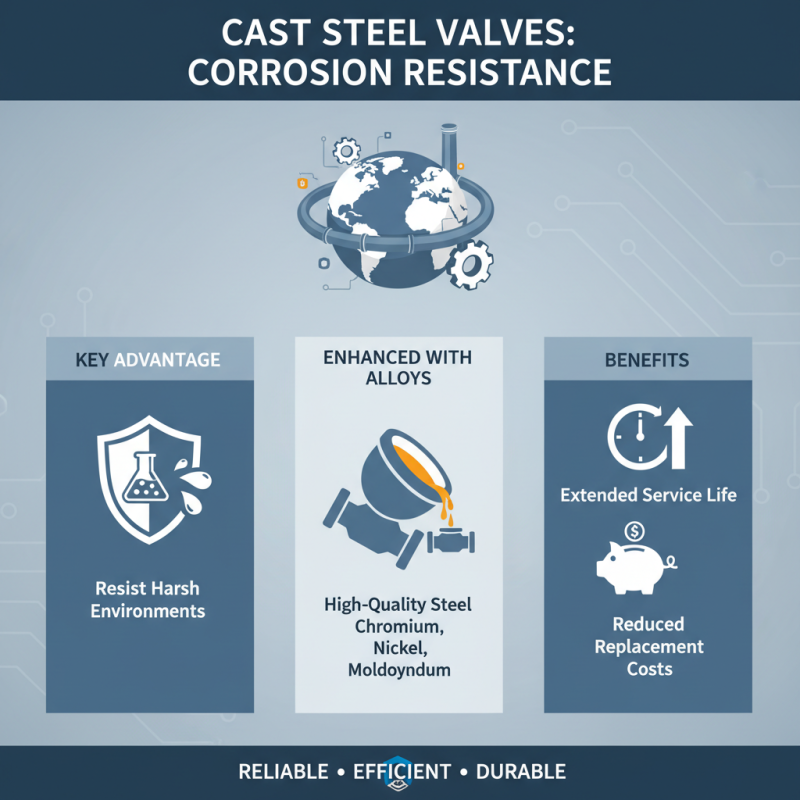
Corrosion Resistance: Enhancing Valve Longevity

Top 10 Benefits of Cast Steel Valves for Industrial Applications

Corrosion resistance is one of the most significant advantages of cast steel valves in industrial applications. These valves are made from high-quality steel alloys that contain elements specially designed to withstand harsh environments. By minimizing the effects of corrosive substances, such as chemicals and saltwater, cast steel valves extend their service life, ensuring reliable performance even under the most demanding conditions. This longevity not only boosts operational efficiency but also reduces the need for frequent replacements, which can be costly and disruptive.

The robustness of cast steel, coupled with advanced protective coatings, further enhances their resistance to corrosion. These protective measures help to shield the valves from oxidation and deterioration, making them ideal for critical applications in industries like oil and gas, pharmaceuticals, and water treatment. By investing in corrosion-resistant cast steel valves, industries can significantly lower maintenance costs while maintaining the integrity of their systems. Ultimately, the enhanced durability provided by these valves translates to increased safety and reliability, which are crucial in industrial operations where failures can lead to serious consequences.

Cost-Effectiveness: Economic Benefits of Using Cast Steel Valves

When considering industrial applications, the cost-effectiveness of cast steel valves stands out as a compelling advantage. These valves are often more affordable than their alternatives, such as forged steel or exotic materials, without compromising quality or durability. When properly maintained, cast steel valves exhibit a long operational life, resulting in lower replacement and repair costs over time. This economic benefit extends to reduced downtime during manufacturing processes, since well-constructed cast steel valves are reliable and can handle high-pressure environments efficiently.

Additionally, the manufacturing processes for cast steel valves can be more streamlined compared to other materials, allowing for quicker production times. This efficiency not only leads to savings on initial procurement but also helps businesses to remain agile in a competitive market. Lower initial costs combined with superior longevity position cast steel valves as a financially sound investment for industries that require reliable and effective fluid control solutions. As industries continue to focus on optimizing expenses while ensuring operational integrity, cast steel valves present a wise choice that balances cost and performance effectively.

Top 10 Benefits of Cast Steel Valves for Industrial Applications

Versatility in Applications: Where Cast Steel Valves Excel

Cast steel valves are increasingly recognized for their exceptional versatility across various industrial applications. Their ability to handle extreme temperatures and pressures makes them suitable for a wide range of environments, including oil and gas, water treatment, and chemical processing. For instance, according to a report by Frost & Sullivan, the global market for industrial valves, which includes cast steel variants, is expected to grow significantly, driven by the ongoing demand for infrastructure development and maintenance in various sectors.

One of the primary advantages of cast steel valves is their superior durability. These valves can withstand corrosive substances and harsh operational conditions more effectively than many alternatives. A study by MarketsandMarkets projects that the corrosion-resistant valve market will reach $4.6 billion by 2025, highlighting the increasing investment in equipment reliability. Furthermore, the high strength-to-weight ratio of cast steel allows for compact design, making these valves ideal for applications with space constraints.

Tips: When selecting cast steel valves for specific applications, consider the operating environment and the types of fluids involved. It’s essential to consult with engineers or valve experts to ensure that the chosen valves will optimize performance and safety. Additionally, regular maintenance is key to extending their lifespan and efficiency, ensuring that systems run smoothly with minimal downtime.

Top 10 Benefits of Cast Steel Valves for Industrial Applications

Benefit Description Application Areas
Durability High strength and resistance to wear and tear. Oil & Gas, Power Generation
Versatility Suitable for various pressures and temperatures. Chemical Processing, Water Management
Corrosion Resistance Resistant to different corrosive environments. Marine, Wastewater Treatment
Cost-Effectiveness Long lifespan reduces replacement costs. Manufacturing, HVAC Systems
Ease of Maintenance Simplified maintenance procedures due to rugged design. Pulp and Paper, Food Processing
High Flow Capacity Allows for efficient fluid transmission. Mining, Petrochemical
Adaptability Customizable configurations for various needs. Industrial Automation, HVAC
Thermal Stability Maintains integrity under high temperatures. Power Plants, Refineries
Safety Features Designed with safety features to prevent leaks. Chemical, Oil & Gas Industry
Regulatory Compliance Meets various industry standards and regulations. Pharmaceutical, Food & Beverage
×
img

    Contact Info

    Phone number

    661-392-8948

    Address info

    3451 Pegasus Drive, Bakersfield, CA USA