How to Choose Commercial Wall Lights for Global Projects?
Choosing Commercial Wall Lights for global projects is not simply a matter of style, brightness, or price. Each project must respond to climate, building use, maintenance access, and local electrical requirements. A coastal hotel may need corrosion-resistant housings, while a shopping center may require strong visual guidance after sunset. Small differences matter.
Lighting designer and author James R. Benya stated, “Lighting is the one building system that affects every other building system.” His observation remains highly practical. Wall-mounted fixtures influence security, customer comfort, architectural identity, and energy performance. Therefore, project teams should compare photometric data, beam distribution, color rendering, glare control, ingress protection, and expected service life. A warm 3000K fixture can support hospitality spaces, while a higher color temperature may suit transport or commercial work areas. The choice should follow the environment, not a fashionable catalog image.
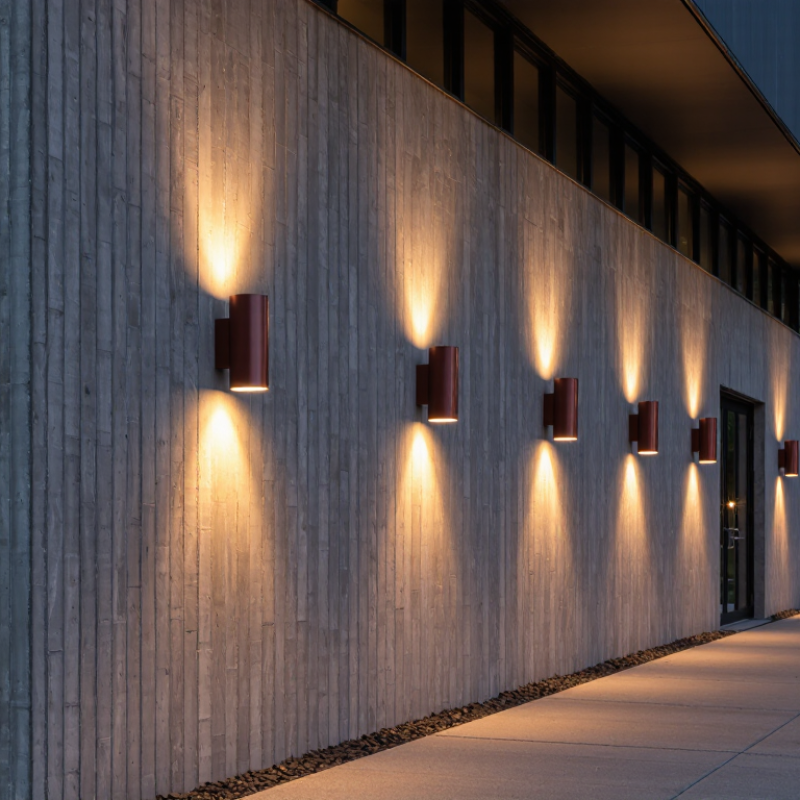
Global procurement also demands careful coordination. Confirm voltage compatibility, dimming methods, emergency-lighting interfaces, certifications, spare-part availability, and installation instructions. Check samples under real surfaces, because painted concrete and textured stone can change perceived brightness. Do not rely on photographs alone. They often hide glare and uneven illumination.
A perfect specification is rarely possible. Budget pressure, late design changes, and regional supply issues can weaken even a strong plan. That is why documented testing and local technical review remain essential. The best Commercial Wall Lights are not merely attractive. They are dependable, serviceable, and appropriate for the people who use the space every day.
Project Requirements and Performance Goals
Global commercial projects need wall lights chosen around real site conditions, not attractive catalog images. Start with the project’s purpose, mounting height, viewing distance, and operating hours. A hotel corridor may need soft, glare-controlled light, while a transport facility needs stronger illumination and impact resistance. Confirm voltage, frequency, dimming methods, color temperature, and expected lifetime before approving a fixture.
Performance goals should be measurable. Define target illuminance, uniformity, beam distribution, color rendering, ingress protection, and impact resistance. Request photometric files, test reports, installation instructions, and maintenance data. Check whether the light performs consistently in humid coastal areas, dusty construction zones, or cold exterior spaces. Local electrical requirements also need verification. A global specification can still fail when local conditions are assumed.
Tips
Create a room-by-room lighting schedule. Record mounting surfaces, cable routes, access limits, and cleaning methods. Test one sample on site during daytime and nighttime. Watch for reflected glare on polished stone or glass. Review the sample after several weeks, not only after installation. Small issues often appear late. Leave clear replacement guidance for facility teams. It may be wise to accept a slightly less decorative fixture when service access is difficult. That trade-off can protect long-term performance, although it may disappoint the original visual concept.
How to Choose Commercial Wall Lights for Global Projects?
Project Requirement: Select the minimum water-protection level according to the installation environment and maintenance exposure.
Performance Goal: The IPX levels shown are based on IEC 60529 water-ingress test classifications. Confirm the complete IP rating, local electrical codes, mounting conditions, and project-specific requirements before specification.
Regional Codes, Standards, and Electrical Compatibility
Choosing commercial wall lights for global projects requires more than matching lumen output and appearance. Regional codes can change the entire specification. North American projects often use 120 V, 60 Hz systems, while many European projects use 230 V, 50 Hz. These patterns are not universal. Confirm the actual site supply before approving any fixture.
Check the required certification and installation rules with the local electrical engineer. A fixture may need compliance with IEC-based standards, national wiring codes, or project-specific inspection requirements. Review its IP rating for rain, dust, and washdown areas. For public corridors, IK impact protection may also matter. Class I fittings require protective grounding, while Class II fittings use reinforced insulation. The wrong assumption can delay inspection.
Electrical compatibility deserves equal attention. Confirm the driver’s input range, frequency tolerance, inrush current, dimming method, and terminal design. A 0–10 V system may not work with phase-cut controls. Emergency lighting can require separate testing and battery provisions. Surge protection is important near exposed façades. Keep the documents.
Ask for test reports, installation instructions, photometric files, and declarations of conformity. Local authorities may request different evidence. I have seen projects specify a suitable light, then discover that its driver cannot handle the site voltage. That error is avoidable, but product sheets are sometimes incomplete. Recheck every assumption with a qualified local professional.
Light Quality, Distribution, and Energy Efficiency
How to Choose Commercial Wall Lights for Global Projects?
Light Quality, Distribution, and Energy Efficiency
Commercial wall lights should support people, not merely decorate a façade or corridor. Light quality begins with color rendering, glare control, and stable color temperature. For offices, retail spaces, and hospitality areas, a CRI above 80 is often practical. Higher values may suit galleries, showrooms, and premium interiors. Warm light can soften a hotel lobby, while neutral white light usually supports visual tasks better. The choice must follow the space’s purpose.
Distribution deserves equal attention. A narrow beam can emphasize signage, columns, or textured walls. A wide beam spreads light across long corridors and reduces dark patches. I have seen projects use identical fixtures throughout, even when ceiling heights changed significantly. That approach looked tidy on paper, but produced uneven brightness onsite. Photometric simulations help, yet a physical mock-up remains valuable. Small details matter.
Energy efficiency involves more than wattage. Check delivered lumens, optical performance, lifetime ratings, and dimming compatibility together. Occupancy sensors and daylight controls can reduce unnecessary operating hours, especially in circulation areas. However, overly aggressive dimming may create uncomfortable visual changes. Local voltage conditions, maintenance access, and regional electrical requirements also need review. A lower-priced fixture can become expensive when cleaning is difficult or replacement cycles are short. Better decisions come from comparing measured performance, not impressive specifications alone.
Materials, Durability, and Environmental Protection
For global commercial projects, wall lights must survive more than a showroom inspection. Material selection affects safety, service life, and maintenance costs. Marine-grade aluminum resists moisture, while stainless steel performs well in coastal areas. Polycarbonate lenses can handle impact better than ordinary glass. However, every material has limits.
In project reviews, I check the installation environment before approving a fixture. Dusty streets need sealed housings and suitable IP protection. Public corridors may require stronger impact resistance, such as an appropriate IK rating. Durable powder coatings help prevent fading and corrosion, but poor surface preparation can still cause peeling. I have seen attractive finishes fail early because drainage was overlooked. Small details matter.
Tips: Request samples, test seals, and inspect hidden joints. Choose replaceable drivers and LED modules where practical. This can reduce electronic waste and simplify future repairs. Prefer recyclable metals, compact packaging, and low-energy light sources. Environmental protection is not only about energy use. It also includes transport weight, repair access, and responsible disposal. Check regional electrical requirements and environmental documentation before ordering. Standards differ. Do not assume one approval works everywhere. A careful specification should record material grade, coating thickness, ingress protection, expected operating hours, and cleaning conditions. Leaving these details unclear may create avoidable costs later.
 (780) 669-9420
