 (780) 669-9420
How to Choose the Best Foil Machine from China?
Choosing the best Foil Machine from China requires more than comparing prices and product photos. A suitable machine must match your materials, production volume, foil width, and finishing goals. It should also deliver stable pressure, accurate temperature control, and clean registration during long production runs.
David Zwang, a respected printing and packaging technology consultant, has emphasized, “Equipment value comes from repeatable quality, not impressive specifications alone.” This principle matters when reviewing Chinese suppliers. A machine may advertise high speed, yet struggle with thin paper, textured stock, or small lettering. Request test samples using your actual materials. Inspect solid coverage, edge sharpness, foil release, and registration under strong light. Small defects become expensive when thousands of sheets are processed.
Look closely at the heating system, stamping area, control interface, spare parts, and technical support. Ask whether the manufacturer provides installation guidance, operator training, maintenance instructions, and realistic delivery timelines. A factory video is useful, but it cannot replace a live demonstration or a documented acceptance test. Check the supplier’s experience with similar machines and request verifiable customer references.
Do not choose speed alone.
A lower-cost Foil Machine may seem attractive at first. However, unstable temperature control can increase waste and downtime. Even experienced buyers sometimes overlook service response times. That mistake deserves reflection. The strongest decision balances machine capability, supplier reliability, operating cost, and future expansion. Careful comparison creates a safer investment and more consistent foil-finishing results.
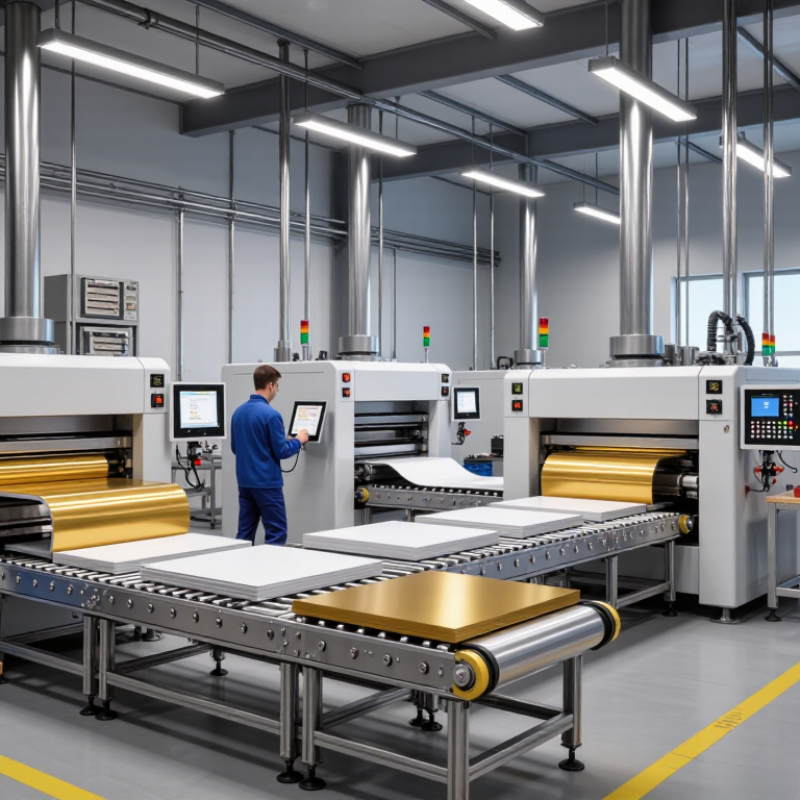
Define Foil Type, Substrate, Format, and Required Production Volume
How to Choose the Best Foil Machine from China?
Define Foil Type, Substrate, Format, and Required Production Volume
Choosing the best foil machine from China starts with four production facts: foil type, substrate, format, and volume. Hot stamping foil needs heat, pressure, and accurate dwell control. Cold foil usually requires adhesive application and curing coordination. Test both when your artwork includes fine lines or large solid areas. Metallic transfer is not equally stable on every surface. Ask for sample runs using your actual foil, ink, and substrate. This exposes adhesion problems early.
Name the substrate precisely. Coated paper, uncoated paper, synthetic labels, films, cartons, and laminated boards react differently. Record thickness, surface energy, moisture, and allowable heat. A machine suitable for 80 gsm paper may struggle with a rigid 600-micron board. Ask about registration tolerance, foil waste, drying conditions, and changeover time. Small details matter.
Define format before comparing machine prices. Sheet-fed work needs maximum sheet size, gripper margin, and tooling area. Roll-fed production needs web width, roll diameter, tension range, and splice handling. Then estimate realistic monthly volume, not an optimistic target. Short runs favor quick setup and modest tooling costs. Continuous orders justify automation, larger foil rolls, and faster cycle rates. Request a factory acceptance test with measurable samples and written tolerances. Confirm spare parts, training, remote diagnosis, and service response. A cheaper machine can become expensive when one sensor stops production. I would leave capacity headroom, though too much headroom wastes money. That trade-off deserves an honest calculation.
| Machine Category | Foil Type | Suitable Substrates | Typical Format | Typical Production Volume | Key Technical Characteristics | Best Selection Scenario |
|---|---|---|---|---|---|---|
| Sheet-Fed Hot Foil Stamping Press | Hot stamping foil, including metallic, pigment, holographic, and security foils | Coated and uncoated paper, paperboard, folding cartons, covers, labels, and some synthetic sheets | Commonly B2 or B1 sheet formats; exact maximum sheet size depends on the press | Medium to high: approximately 5,000–50,000 sheets per shift | Heated stamping die, pressure-controlled impression, interchangeable foil-feeding systems, and optional multiple foil pulls | Choose this option for premium packaging, book covers, certificates, invitations, and repeat orders requiring strong metallic or tactile effects. |
| Automatic Flatbed Foil Stamping Machine | Hot stamping foil and, with suitable tooling, embossing foil | Paper, cardboard, leather, coated boards, PVC sheets, and other flat materials compatible with the platen | Small to large flat sheets; working areas are commonly specified by platen size | Low to medium: approximately 1,000–15,000 impressions per shift | Flatbed platen, die heating, adjustable dwell time, and relatively simple tooling changes | Suitable for varied job sizes, short runs, custom stationery, packaging prototypes, and businesses prioritizing flexibility over maximum speed. |
| Roll-to-Roll Hot Foil Stamping Machine | Hot stamping foil supplied from rolls | Self-adhesive label stock, paper rolls, coated films, flexible packaging webs, and selected synthetic materials | Narrow-web or mid-web roll widths; the usable width is determined by the machine and tooling | High: approximately 50,000–500,000 linear meters per month | Web tension control, servo registration, continuous foil feeding, rotary or intermittent stamping, and rewind capability | Recommended for continuous label and flexible-web production where high utilization, registration accuracy, and low waste are important. |
| Cold Foil Transfer Unit | Cold foil transfer film used with adhesive and UV or conventional curing systems | Paper, coated paperboard, labels, and selected filmic webs that accept a printed adhesive layer | Sheet-fed or web-fed formats, depending on the press configuration | Medium to high: approximately 20,000–300,000 impressions or linear meters per month | Does not use a heated stamping die; foil is transferred to an adhesive image, often inline with printing | Choose cold foil when fine image coverage, fast inline production, and lower tooling costs are more important than deep embossing or heavy solid coverage. |
| Digital Foil Transfer Machine | Digital toner-reactive foil or digitally controlled transfer foil | Laser-compatible paper, coated stocks, synthetic sheets, labels, and selected specialty media | Usually SRA3, A3, or other digital-printing sheet formats | Low to medium: approximately 100–5,000 sheets per job | No physical stamping die is normally required; variable data and rapid artwork changes are possible | Best for short runs, personalized products, proofing, seasonal designs, and on-demand work with frequent artwork changes. |
| Roller-Type Hot Foil Stamping Machine | Hot stamping foil for continuous or semi-continuous transfer | Paper, labels, films, leather, synthetic sheets, and other materials with a stable, relatively even surface | Roll-fed or sheet-fed; usable width is based on roller width and product dimensions | Medium: approximately 10,000–100,000 pieces per month | Heated roller, adjustable pressure, continuous foil movement, and efficient operation on repeated narrow products | Useful for narrow strips, labels, ribbons, flexible materials, and products that require continuous decorative transfer rather than large-area flatbed stamping. |
| Special-Purpose Foil Machine for Leather or Irregular Items | Hot stamping foil, pigment foil, and selected transfer films | Leather, artificial leather, fabric-backed materials, wood veneer, plastic parts, and shaped products | Determined by the fixture, working head, and product geometry rather than standard paper-sheet size | Low to medium: approximately 500–20,000 pieces per month | Custom fixtures, controlled heating, adjustable pressure, and product-specific positioning systems | Choose this type for logos, serial marks, decorative details, and branding on three-dimensional or non-standard products. |
