
Blog
- Home
- Blog
What Is an Electric Frying Pan and How Does It Work?
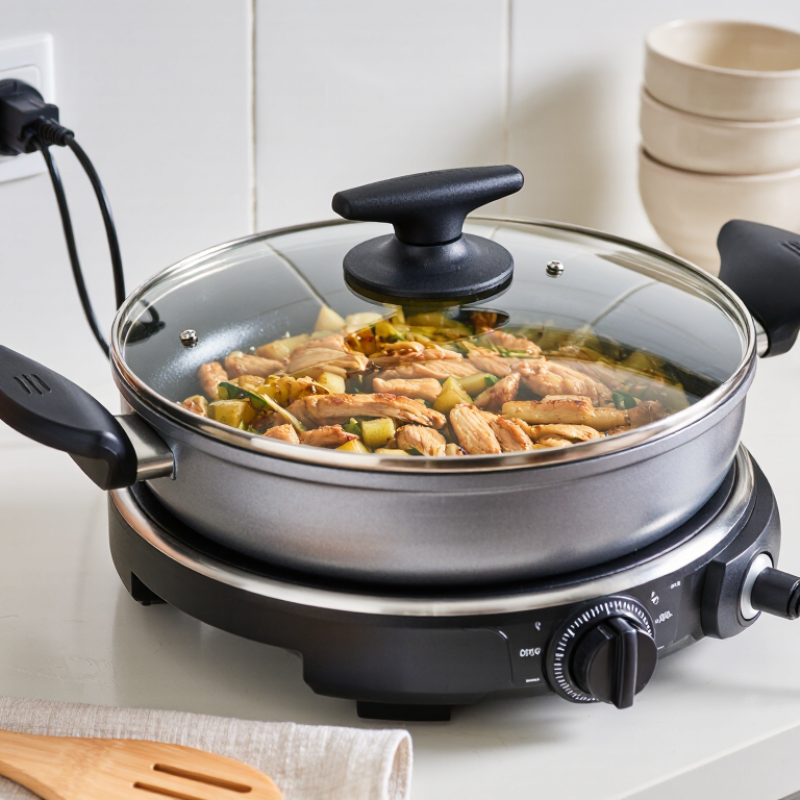
An Electric Frying Pan is a countertop appliance that combines a shallow pan with a built-in heating system. It plugs into an electrical outlet and warms food without using a stovetop burner. The design is practical for kitchens with limited space, family meals, and controlled cooking tasks.
Inside the base, an electric heating element transfers heat through the pan’s cooking surface. A thermostat measures temperature and switches the heat on or off to maintain the selected setting. This process helps users fry, sauté, simmer, braise, or keep food warm. The removable temperature dial usually offers more control than a traditional pan placed over a strong flame. Still, the dial is not always perfectly accurate. Actual heat can vary near the edges, especially when the pan is crowded.
That detail matters.
From practical use, even heating depends on the pan’s material, food quantity, and lid position. A covered pan traps steam, while an uncovered surface allows moisture to escape and browns food more effectively. Responsible cooking also requires checking the manufacturer’s instructions, avoiding water near electrical parts, and using heat-resistant handles. An Electric Frying Pan can simplify everyday cooking, but it does not replace attention. Food may cook faster than expected, and delicate ingredients can burn if the temperature is set too high. Understanding its heating cycle makes the appliance safer, more predictable, and easier to use with confidence.
Definition and Main Parts of an Electric Frying Pan
An electric frying pan is a countertop cooking appliance with a built-in heating system. Unlike a conventional pan, it does not need a stovetop burner. Electricity warms a heating element beneath the cooking surface. The pan then transfers heat to food through direct contact.
The main body usually includes a metal cooking plate, often coated for easier cleaning. Under this plate sits the heating element, which produces heat when current flows through it.
A removable temperature controller adjusts the heat level through a thermostat. The thermostat switches the element on and off to maintain the selected temperature. It is not perfectly exact. I check food visually and with a thermometer when cooking requires accuracy.
The pan also has heat-resistant handles, a power cord, and an indicator light. Many models include a glass lid with a small steam vent. The lid holds moisture while the vent reduces pressure inside the pan.
During use, I keep the controller and cord away from water. I also place the appliance on a stable, heat-resistant surface. The pan can fry, simmer, sauté, and braise, but its performance depends on the heating element and the pan’s contact with the counter. Uneven surfaces may affect stability. That detail is easy to overlook.
How the Heating System Produces and Controls Heat
What Is an Electric Frying Pan and How Does It Work?
An electric frying pan creates heat through a resistance wire beneath its cooking surface. When electricity passes through this wire, resistance changes electrical energy into heat. That heat spreads through the metal plate and warms the pan’s base. A temperature sensor monitors the surface continuously. When the pan reaches the selected temperature, the thermostat reduces or stops power to the heating wire. When the surface cools, power returns. This repeating cycle keeps cooking temperatures reasonably stable.
The control dial does not create heat by itself. It sets a target range for the thermostat. Higher settings keep the heating circuit active longer, while lower settings create shorter heating periods. In practical use, the pan may feel hotter near the center than along the edges. Food quantity, lid position, and room temperature also affect performance. I have found that preheating helps, but it is not perfectly consistent every time. A crowded pan can lower the surface temperature quickly. The thermostat may then need several minutes to recover.
Tips: Preheat the pan before adding food, and allow space between pieces. Use a separate thermometer when accurate temperature matters. Watch for sudden cycling, uneven browning, or a loose control connection. These signs may suggest sensor or heating problems. Never treat the dial as an exact laboratory measurement. Small adjustments often produce better results than constant, large changes.
How to Use an Electric Frying Pan Step by Step
An electric frying pan combines a metal cooking surface, a heating element, and a thermostat. The thermostat switches heat on and off to maintain your selected temperature. This design makes cooking more controlled than using a pan over an open burner. Still, temperature markings can vary between models.
Place the pan on a dry, stable counter and attach the temperature control. Keep the cord away from hot surfaces. Add a small amount of oil, then set the heat according to your recipe. Let the surface preheat for several minutes. A drop of water should sizzle gently, not disappear instantly. Add food in a single layer, leaving space between pieces. Crowding lowers the temperature and can make food steam instead of brown. Stir or turn ingredients with wooden or heat-safe utensils. Check thick foods with a food thermometer, especially poultry, meat, and leftovers. My first attempt at frying vegetables used too much oil, and the edges became greasy before the centers softened. Lower heat and smaller batches worked better.
Avoid immersing the temperature control or electrical connection in water. Unplug the pan before cleaning, and wait until it cools. Wipe the cooking surface with a soft sponge rather than abrasive tools. Never move the pan by pulling its cord. If food sticks, soak the cooled surface briefly. The exact heat setting may need adjustment because different foods and kitchens behave differently. Watch the food, not only the dial.
Cooking Methods and Foods Suited to Its Design
An electric frying pan combines a shallow cooking surface, a heating element, and an adjustable thermostat. The thermostat cycles power to maintain the selected temperature. Its broad base spreads heat across the pan, while the lid traps steam. This design supports more than frying.
It works well for sautéing vegetables, searing chicken, shallow-frying fish, and browning ground meat. The wide surface gives mushrooms space to release moisture instead of steaming in a crowded pile. Add a little oil, then preheat the pan before cooking. For braised chicken or beans, lower the heat and cover the pan. Gentle simmering helps soften ingredients without aggressive boiling. Pancakes, grilled sandwiches, and hash also suit the flat surface. They need steady heat and easy turning.
Food safety still depends on internal temperature, not appearance. The USDA Food Safety and Inspection Service recommends 165°F for poultry, 160°F for ground meats, and 145°F for whole cuts of beef, pork, veal, and lamb, followed by a three-minute rest. Use a calibrated thermometer near the center of the food. The FDA Food Code 2022 sets 135°F as the minimum hot-holding temperature for many cooked foods. That rule concerns holding, not cooking. A small mistake matters. Electric pans can develop hotter zones, especially around the heating element. Stir sauces, rotate food, and check temperatures in more than one spot.
Safety Features, Cleaning, and Maintenance Requirements
An electric frying pan combines a heated base, thermostat, and removable or fixed cooking surface. Its thermostat cycles power to maintain the selected temperature. Safety depends on more than the dial. Look for stable feet, insulated handles, a secure lid, overheat protection, and a power cord without cracking. NFPA’s Home Cooking Fires report, covering 2014–2018, estimated 172,900 home structure fires annually. Unattended cooking equipment was the leading contributing factor in 31% of nonconfined cooking fires. Do not leave the pan heating while answering a call or leaving the room. Heat lingers.
Cleaning should begin after unplugging and cooling the pan completely. Wipe grease from the surface with warm water and mild detergent. Never immerse the heating control, connector, or electrical base. Food residue around the thermostat can create uneven heating and unpleasant smoke. A soft sponge is safer than steel wool, which may damage the cooking surface. I sometimes want to scrub immediately after cooking, but hot metal and water are a poor combination. Check it cold.
Tips: Inspect the cord before every use. Use a grounded outlet, and avoid extension cords unless the instruction manual permits them. Keep handles away from the counter edge. Empty oil only after it cools. Test thick foods with a food thermometer, since thermostats can drift over time. The USDA identifies 40°F–140°F as the food-safety danger zone; holding food there too long increases bacterial growth. Replace damaged parts rather than improvising repairs. (Sources: NFPA, Home Cooking Fires; USDA, Food Safety and Inspection guidance.)
What Is an Electric Frying Pan and How Does It Work?
An electric frying pan uses an electric heating element controlled by an adjustable thermostat to maintain the selected cooking temperature. Use a food thermometer to verify that food reaches a safe internal temperature, since pan settings and cooking conditions can vary.
Key safety practices include keeping the power connection and control unit dry, avoiding immersion of the appliance, and unplugging it before cleaning. Allow the pan to cool completely, then clean it according to the manufacturer’s instructions. Do not use abrasive cleaners that could damage the cooking surface.
Food-safety reference temperatures: Poultry and leftovers should reach 165°F (74°C), ground meats 160°F (71°C), and whole cuts of beef, pork, lamb, and veal 145°F (63°C) followed by a three-minute rest.
(780) 669-9420