
Blog
- Home
- Blog
10 Oil Storage Fuel Drum Buying Tips for Global Buyers
Choosing an Oil Storage Fuel Drum is not merely a capacity decision. It affects product quality, worker safety, transport efficiency, and long-term operating costs. Global buyers must examine the drum’s steel grade, wall thickness, internal coating, closure design, and verified load performance. A 200-liter drum may look suitable, yet its lining could fail when exposed to a particular fuel blend. Small details matter.
Petroleum engineering author Dr. James G. Speight emphasizes, “Safety is the most important consideration in petroleum operations.” That principle should guide every purchase. Buyers should request material certificates, leak-test records, coating specifications, and clear inspection procedures. They should also confirm compatibility with local storage conditions, including humidity, heat, cold, and coastal air. A reliable supplier explains these limits instead of promising that one model fits every market.
Think beyond the factory floor. Can workers lift the drum safely? Does the bung remain secure after repeated handling? Will the markings stay readable after months outdoors? Check stacking guidance, pallet dimensions, delivery protection, and emergency handling instructions. Compliance requirements differ across countries, so qualified local advice remains necessary. Do not rely on a copied certificate.
Some choices are easy to overlook. A cheaper drum may create higher disposal, leakage, or replacement costs. An expensive finish may also be unnecessary for short-term indoor use. The honest answer is rarely perfect. Review the actual fuel, environment, supply route, and service life before ordering. These ten buying tips provide a practical starting point, but careful verification should remain the final decision-maker.
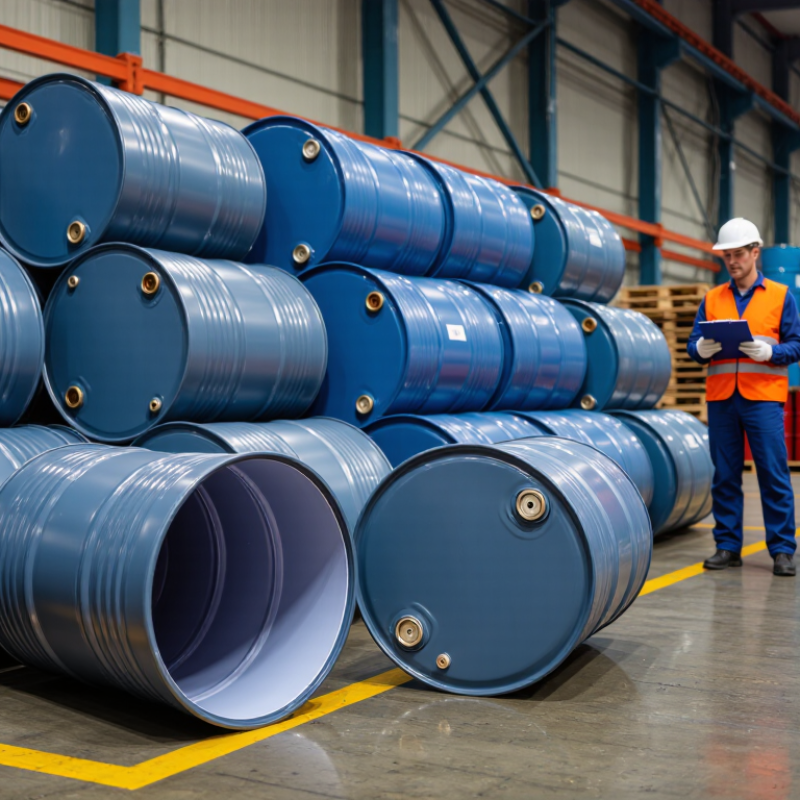
Understanding Oil Storage Fuel Drum Types and Applications
Oil storage fuel drums are not interchangeable containers. Their design should match the oil, storage period, and handling environment. Steel drums suit many lubricants and fuel oils because they resist impact and provide strong stacking support. However, moisture can cause external rust, especially near coastal warehouses. High-density polyethylene drums resist corrosion and are easier to move, but heat and sunlight may weaken them over time.
Choose a closed-head drum for liquids that need sealed storage and limited exposure. Open-head drums work better when operators need wider access for inspection, cleaning, or transferring thicker oils. Check the drum’s material compatibility before buying. Some oils can soften plastic seals or damage internal coatings. Small details matter.
I have seen buyers focus on capacity and miss the outlet design. A poorly matched bung can cause leaks, slow pumping, or contamination. Confirm thread size, gasket material, and dispensing method. For outdoor use, add secondary containment, secure the drums upright, and protect them from direct heat. Grounding may be necessary for certain flammable liquids, depending on local safety rules. Always verify regional requirements before shipment or installation.
A clean drum matters.
Inspect dents, seams, closures, and labels upon arrival. Used drums may look economical, but unknown residues create real handling risks. Fuel-grade storage also needs ventilation and controlled access. One assumption often fails: larger capacity is not always better. A smaller drum can reduce lifting strain, waste, and exposure during frequent use.
Checking Material Quality, Capacity, and Storage Compatibility
Buying an oil storage fuel drum requires more than checking its price. In warehouse inspections, I look closely at the material, seams, closures, and surface finish. Heavy-gauge steel suits many industrial oils, while compatible HDPE may resist selected chemicals and moisture better. Do not assume either material fits every oil. Request compatibility data for the exact fluid, additives, temperature range, and storage period. Check whether the inner coating can prevent corrosion. Inspect welds and rolled edges for pinholes or sharp defects. The drum should have a secure gasket and a closure that remains tight after repeated opening. Ask for batch records, leak-test results, and material certificates. These details are more useful than attractive product photos.
Capacity also needs practical checking. A 200-liter label may describe total volume, not safe working capacity. Leave expansion space when temperatures change during international storage or inland transport. Confirm the drum’s external dimensions, pallet pattern, and lifting points before ordering containers. A few extra centimeters can disrupt warehouse racking. Storage compatibility includes ventilation, sunlight protection, spill control, and separation from heat sources. The floor should remain level and strong enough for full drums. I once saw a suitable drum stored on a weak wooden platform; the material was correct, but the arrangement was not. That mistake deserved a second review. Ask the supplier for stacking limits, recommended orientation, and inspection intervals. Test one filled sample before committing to a large shipment.
10 Oil Storage Fuel Drum Buying Tips for Global Buyers - Checking Material Quality, Capacity, and Storage Compatibility
| No. | Buying Dimension | What to Check | Practical Benchmark or Fact | Why It Matters | Buyer Action |
|---|---|---|---|---|---|
| 1 | Drum Material | Confirm whether the drum is carbon steel, stainless steel, or high-density polyethylene (HDPE), and request the material specification. | Steel provides high mechanical strength; stainless steel offers better resistance to many corrosive products; HDPE is lightweight and resists many chemicals. | The wrong material can corrode, crack, permeate, or contaminate the stored oil. | Match the material with the exact oil safety data sheet (SDS). |
| 2 | Nominal Capacity | Verify both nominal capacity and usable filling volume. Common steel drum sizes include approximately 60 L, 100 L, and 200–210 L. | A 200 L drum does not normally hold 200 L of liquid under every operating condition; headspace is needed for safe handling and thermal expansion. | Correct capacity improves inventory planning and reduces overflow risk. | Compare internal volume, working fill level, and shipping weight. |
| 3 | Oil Compatibility | Check compatibility with the specific product, such as diesel fuel, mineral oil, hydraulic oil, lubricating oil, or used oil. | Compatibility depends on the oil formulation, additives, temperature, storage duration, and contact materials such as seals and liners. | Additives or residues may react with coatings, gaskets, or plastic walls. | Obtain written compatibility confirmation for the exact fluid. |
| 4 | Wall Thickness and Strength | Request wall thickness, body construction, bottom design, stacking rating, and resistance to dents or impact. | Wall thickness varies by drum design and capacity; there is no single thickness suitable for every oil or transport application. | Mechanical damage can cause leaks even when the chemical compatibility is correct. | Review test reports and the permitted stacking load before purchase. |
| 5 | Closure and Gasket | Inspect bung type, flange design, closure torque requirements, gasket material, and tamper-evident features. | A drum may use a removable-head cover or a tight-head design with threaded openings; gasket selection must suit the oil and temperature. | Poor closures are a common source of leakage, vapor release, and contamination. | Ask for closure drawings and replacement-gasket specifications. |
| 6 | Interior Coating and Cleanliness | Check whether the interior is bare, coated, lined, or cleaned to a specified standard. Confirm the drum is free from water, rust flakes, oil residue, and foreign matter. | Cleanliness requirements are stricter for hydraulic, turbine, transformer, and other sensitive oils than for many general-purpose fuels. | Contamination can reduce lubricant performance and damage downstream equipment. | Request a cleaning declaration or inspection record. |
| 7 | UN Certification and Transport | Determine whether the filled drum will be shipped as regulated dangerous goods and verify the applicable UN packaging mark and test level. | UN approval is product- and packaging-specific; it does not automatically apply to every liquid, closure, or transport route. | Incorrect packaging can lead to shipment rejection, fines, leakage, or safety incidents. | Confirm requirements under the destination and transit-country regulations. |
| 8 | Storage Environment | Evaluate outdoor or indoor use, temperature range, sunlight exposure, humidity, ventilation, ignition sources, and local fire-safety rules. | Many oil products should be kept in a cool, dry, well-ventilated area away from heat, sparks, flames, and incompatible chemicals. | Heat and ultraviolet exposure can accelerate degradation or weaken some containers. | Select a drum rated for the actual storage conditions, not ideal warehouse conditions. |
| 9 | Spill Containment | Plan for bunds, spill pallets, drip trays, absorbent materials, and safe dispensing equipment. | Containment capacity is governed by local environmental and fire regulations; requirements vary by location and storage quantity. | A sound drum alone does not prevent environmental damage after a valve, bung, or handling failure. | Confirm the site’s secondary-containment requirement before delivery. |
| 10 | Traceability and Inspection | Check batch number, production date, inspection records, dimensions, tare weight, labeling, and after-sales replacement parts. | Traceable records support quality investigations, stock rotation, regulatory checks, and warranty claims. | Without documentation, it is difficult to verify capacity, certification, or manufacturing consistency. | Approve samples and documents before placing a large international order. |
Note: Always consult the product SDS, applicable dangerous-goods regulations, local fire codes, and environmental requirements before selecting and using an oil storage fuel drum.
Evaluating Safety Standards, Certifications, and Leak Protection
10 Oil Storage Fuel Drum Buying Tips for Global Buyers
When evaluating an oil storage fuel drum, begin with its intended liquid, capacity, and transport conditions. Material compatibility matters because some oils soften seals or accelerate corrosion. Check the drum’s UN marking, manufacturing date, test pressure, and traceable inspection records. Regional requirements may differ, so confirm documentation with a qualified compliance professional before purchase.
A reliable drum should have sound welds, reinforced chimes, and a properly fitted closure system. Inspect the gasket for cuts, flattening, or chemical swelling. Small details matter. Ask for evidence of pressure testing and leak testing, not only a general certificate. During receiving inspections, place each drum on a clean surface and look for damp rings, oily dust, or a sharp fuel odor. These signs can reveal slow leakage before storage becomes hazardous.
Leak protection also depends on handling and placement. Use compatible secondary containment, keep drums upright, and protect them from impact, standing water, and extreme heat. Do not assume thicker steel solves every risk. A damaged closure can defeat a strong shell. In practical warehouse checks, unclear markings and missing records often cause more concern than minor surface scratches. Still, judgment can be imperfect; a visual inspection cannot replace documented testing. Recheck the drum after movement, especially when it has crossed borders or changed storage locations.
Comparing Suppliers, Pricing, Shipping, and Order Requirements
For global oil storage drum buyers, compare identical specifications, not attractive headlines. Request steel grade, wall thickness, internal coating, closure type, gasket material, capacity tolerance, and leakage-test records. A practical supplier check includes a pre-shipment sample, production photographs, batch certificates, and an agreed inspection method. Ask for the supplier’s monthly capacity and realistic lead time. “In stock” can mean unfinished shells.
Pricing should show the full landed cost. Compare ex-works, FOB, CIF, or delivered quotations separately, including pallets, export documents, duties, insurance, and port charges. The World Bank’s Commodity Markets Outlook, October 2024, projected a 5% decline in overall commodity prices during 2025, but drum quotes may not follow quickly. Steel, coatings, exchange rates, and small order quantities still create sharp differences. A low unit price may hide expensive packaging or weak after-sales support.
Shipping deserves closer attention. UNCTAD’s Review of Maritime Transport 2024 states that more than 80% of global merchandise trade moves by sea. Confirm container loading plans, drum orientation, moisture protection, free storage days, and damage-claim procedures. Ask whether the supplier can provide required transport markings and export paperwork for your destination. Set order requirements in writing: minimum quantity, acceptable defect rate, inspection point, payment milestones, replacement terms, and delivery window. I would not rely on a spreadsheet alone; one damaged pallet can challenge the original calculation. Be careful with forecasts. They are useful, but rarely precise.
Planning Inspection, Maintenance, and Long-Term Drum Storage
When buying oil storage fuel drums, inspect them before they reach your site. Ask for material specifications, wall thickness, coating details, and tested load limits. Check welds, seams, closures, gaskets, and vent fittings for clean workmanship. A flashlight reveals dents, rust pits, and coating gaps. New drums still need inspection. Packaging can hide damage.
Plan a documented receiving inspection with photos, batch records, and serial references. Confirm each closure seals correctly without excessive force. Store drums upright on stable pallets, under cover, and away from standing water. Keep them separated from heat sources, ignition risks, drains, and incompatible chemicals. Use clear labels showing contents, date received, inspection status, and handling instructions. Follow applicable local fire, environmental, and workplace requirements. Requirements vary by location.
During storage, inspect monthly for swelling, corrosion, leaks, loose closures, and damaged labels. Rotate stock using a controlled first-in, first-out plan when suitable for the product. Clean minor dirt with approved methods; do not scrape protective coatings aggressively. Replace questionable gaskets or drums through qualified procedures, and record every action. I have seen teams trust a clean exterior too quickly. Hidden corrosion can develop beneath labels or pallets. Long-term storage needs periodic review, not just a locked door. Recheck conditions after storms, temperature changes, or site repairs. Keep inspection tools calibrated and train handlers to report small concerns early.
(780) 669-9420