China Top 10 Red Light Therapy Face Mask Suppliers?
China’s red light therapy face mask market includes established manufacturers, private-label factories, and newer suppliers. This guide to China’s top 10 red light therapy face mask suppliers examines more than product photos. It considers wavelength specifications, irradiance data, testing records, production experience, and after-sales support. These details matter when evaluating a Red Light Treatment Face device for home use. A polished catalog is not enough.
Photobiomodulation researcher Dr. Michael Hamblin has described photobiomodulation as “the use of light to stimulate, heal, regenerate, and protect tissue.” That broad description offers useful context, but it does not prove that any particular mask delivers a specific skin benefit. Buyers should check whether suppliers provide clear technical documents and explain how their devices were tested. Ask about quality controls, material choices, warranty terms, and consistency between samples and production units. Small details count: a readable instruction sheet, a stable strap, and clearly stated specifications can reveal more than bold marketing claims.
There are limits. Supplier information can change, and a ranking cannot replace independent checks. Some factories share similar product images, while their service and documentation may differ. Not glamorous, but important. The profiles below are intended as a practical starting point, not a guarantee of performance or suitability. Compare claims carefully, request supporting records, and consult a qualified healthcare professional if you have questions about using light-based skincare devices.
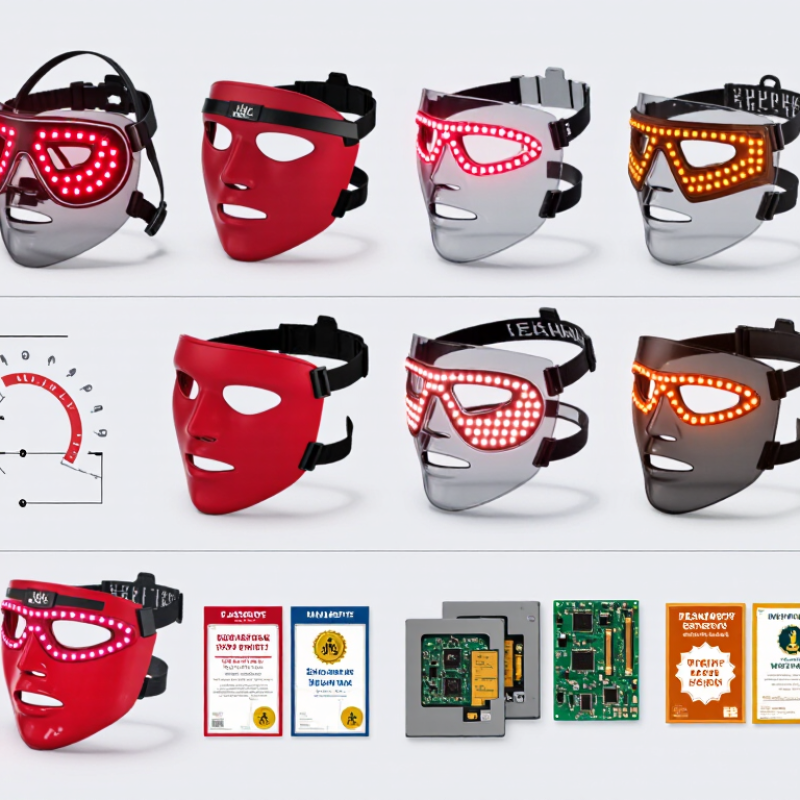
What Red Light Therapy Face Masks Are and How They Work
Red light therapy face masks use light-emitting diodes to deliver low-level red, and sometimes near-infrared, light to the skin. Unlike tanning lamps, they are not designed to create a tan. The light reaches skin tissue, where cells absorb some of its energy; researchers are studying whether this process can influence cellular activity and support collagen-related changes. The experience is usually hands-free: a person wears the mask for a set session, often with eyes closed or protected as the instructions advise. Not magic.
A 2014 controlled study in Photomedicine and Laser Surgery involved 136 volunteers receiving repeated red or near-infrared light treatments. Researchers reported improvements in skin texture and collagen-density measures, but that does not prove every home mask will produce the same result. Device wavelength, light output, fit, and session schedule all matter.
The awkward point: a bright glow alone says little about dose or effectiveness.
Grand View Research valued the global LED light therapy market at about US$1.1 billion in 2023, reflecting broad commercial interest, not proof of clinical benefit. Before buying, check whether the manufacturer publishes measurable device specifications and clear use instructions. Evidence is still developing, and results can vary.
How China’s Red Light Therapy Mask Industry Is Structured
China’s red light therapy mask industry is a supply chain, not a single factory category. LED-chip makers supply light sources; electronics firms build control boards and power systems; plastics and silicone suppliers shape masks; specialist factories assemble, test, and package finished devices. Some suppliers manage several stages, while others focus on contract manufacturing. That difference affects customization, production control, and traceability. A sample mask may look polished, yet its output can vary between production batches.
Market figures need careful reading. Grand View Research estimated the global light therapy market at about US$1.1 billion in 2023 and projected growth through 2030. That market covers more than facial masks, so it is not a China mask-sales figure. For buyers, useful evidence is closer to the factory floor: wavelength test records, irradiance measurements at a stated distance, electrical safety checks, and batch inspection logs. Ask how results are measured. A number without its test conditions tells little.
The supplier base also includes design houses and trading companies. They may coordinate tooling, packaging, and export documentation, while production occurs elsewhere. This can be efficient. It can also make quality responsibility less clear. Factory audits and signed product specifications help reveal who controls each step. Even then, paperwork is not the whole picture; small assembly details can be missed. Good sourcing takes patience.
Key Criteria for Evaluating Chinese Suppliers
A capable Chinese supplier should support its claims with clear, checkable records. Ask for the mask’s wavelength range, measured light output, and test conditions; figures without test details are hard to compare. Review electrical safety documents, material specifications, and quality-control procedures. Check whether production batches are traceable and whether the supplier can explain how defects are handled. A polished catalog is not proof. I would treat a factory audit as useful, but not as a guarantee of consistent production.
Tips: Request a sample from the same production line intended for your order. Inspect the fit, strap adjustment, controls, and charging connection. Ask for written answers about lead times, minimum order quantities, warranty coverage, and replacement parts. Keep the replies.
Before committing, compare sample performance with the supplier’s stated specifications using suitable measurement equipment or an independent testing service. Confirm that instructions describe safe use and do not promise medical results without appropriate evidence. Communication matters, too: specific answers are more useful than quick assurances. If a supplier cannot explain a discrepancy, pause and ask again. This may slow purchasing, but skipping checks can create bigger problems later.
Profiles of 10 Chinese Red Light Therapy Face Mask Suppliers
These ten profiles describe supplier types found in China’s red light therapy face-mask market, not verified company rankings. Supplier 1 focuses on flexible silicone masks with adjustable straps. Supplier 2 offers rigid-shell designs and emphasizes consistent light placement. Supplier 3 specializes in compact models for travel. Supplier 4 develops masks with separate control units and simple timers. Supplier 5 provides multiple wavelength options; buyers should request measured output data. Supplier 6 supports custom colors and packaging, though small orders may cost more. Supplier 7 concentrates on private-label production and export documentation. Supplier 8 offers several mask sizes, useful for checking fit across users. Supplier 9 highlights component testing and traceable production records. Supplier 10 serves buyers seeking coordinated mask and accessory sets. Details vary.
A supplier profile is only a starting point. Ask for test reports, material specifications, production capacity, and sample units before comparing quotations. Check whether light-output figures come from independent measurement or internal testing. Request close-up photos of seams, connectors, and the control interface. Then test comfort and fit over a realistic session. Small details matter. A polished brochure cannot confirm durability, and even a capable factory may have limited experience with a particular design. Some suppliers may also describe performance broadly; ask for precise, substantiated claims. Verify every point directly, and record unanswered questions.
China Red Light Therapy Face Mask Suppliers: Wavelength Reference
These are representative nominal wavelengths used in red and near-infrared photobiomodulation products. They are technical reference points, not verified specifications or a ranking of any supplier; actual mask specifications vary by product.
How to Compare and Verify Suppliers Before Making a Purchase
Choosing among China’s red light therapy face mask suppliers takes more than comparing catalog photos. The Global Wellness Institute’s 2024 Global Wellness Economy Monitor estimated the global wellness economy at $6.3 trillion in 2023. That figure indicates market scale, not product quality. Keep the distinction clear.
Request an independent spectral test report for the exact mask model. Check peak wavelengths, irradiance at the stated wearing distance, and measurement methods. Ask how the supplier calculates energy dose and checks light uniformity across the cheeks and forehead. LED count alone proves little. Not enough. Compare test results with the supplier’s written specifications, then inspect a production sample for fit, heat, cable quality, and controls.
Verify that certificates identify the same model and factory shown in your quotation. Ask for batch records, quality-control checks, warranty terms, and a recent audit or inspection report. A polished certificate is not proof of consistent production. I would still want a pre-shipment sample check; it adds time, but catches details a PDF can miss. Keep claims modest, and request evidence before accepting treatment or performance promises.
 (780) 669-9420
