China Top 10 Lithium Ion Car Battery Manufacturers?
China has become a major production hub for Lithium Ion Car Battery technology, serving electric vehicle brands worldwide. Its manufacturers range from large cell producers to specialized pack integrators. Their factories may use automated welding lines, dry rooms, robotic inspection, and digital quality systems. Yet impressive equipment alone does not prove dependable performance.
This guide examines China’s top 10 Lithium Ion Car Battery manufacturers through practical and technical criteria. These include cell chemistry, energy density, cycle life, thermal management, safety testing, production capacity, warranty support, and supply-chain control. It also considers certifications, independent test evidence, and experience with passenger vehicles, commercial fleets, and energy platforms. A battery pack should survive daily charging, winter mornings, highway heat, and repeated fast-charging sessions. Small design choices matter, including busbar placement, cooling channels, software limits, and enclosure sealing.
The ranking is not permanent. Market positions change.
Public information can also be incomplete or inconsistent. Some manufacturers report laboratory results without explaining test conditions, while others disclose little about long-term field performance. That limitation deserves attention. Buyers should verify technical documents, audit production facilities, review warranty terms, and request application-specific samples before making decisions. This overview aims to offer a balanced starting point, not a substitute for engineering validation. Reliable battery selection requires evidence, clear communication, and careful comparison between advertised performance and real vehicle use.
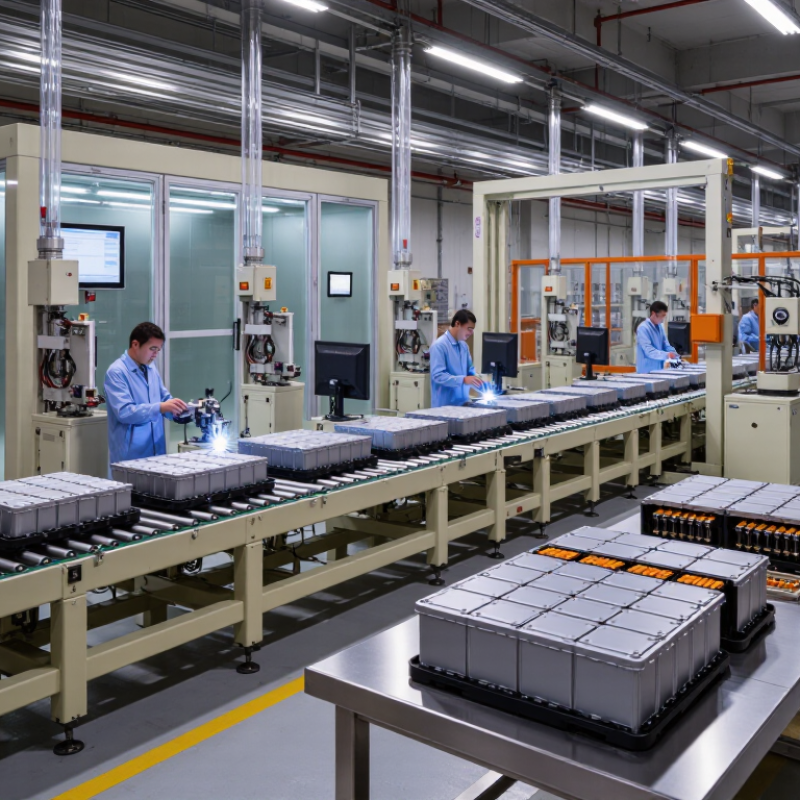
How China’s Top 10 Lithium-Ion Car Battery Manufacturers Are Selected
China’s top 10 lithium-ion car battery manufacturers should be selected through transparent, measurable criteria. Market visibility alone is not enough. The evaluation should combine annual installed capacity, production scale, energy density, cycle life, thermal safety, warranty performance, and global delivery records. SNE Research reported that global electric-vehicle battery usage reached about 876 GWh in 2024, showing the importance of verified shipment data rather than factory announcements.
Safety deserves heavier weight. A battery may offer high energy density, yet perform poorly under heat, vibration, or fast charging. Selection should therefore examine independent testing, recall history, quality certification, and real-world fleet results. The International Energy Agency reported that electric-car battery demand exceeded 750 GWh in 2023, with China representing the largest manufacturing base. This scale matters, but volume alone cannot prove reliability.
A stronger method also reviews research investment, raw-material traceability, recycling systems, and financial stability. Public filings, customs records, certification databases, and third-party testing can cross-check company claims. No ranking is perfectly neutral. Some production data arrive late, while smaller manufacturers may disclose less information. That weakness should be stated clearly. A practical top-10 list should reward consistent evidence, not impressive promises.
Profiles of China’s Ten Leading Lithium-Ion Car Battery Manufacturers
China’s ten leading lithium-ion car battery manufacturers reflect a broad industrial ecosystem. The profiles include large cell producers, specialized pack assemblers, and suppliers focused on commercial vehicles. Their products commonly use lithium iron phosphate or nickel-rich chemistries. Each choice balances energy density, cost, safety, and service life.
Several manufacturers operate automated gigafactories with strict electrode coating and welding controls. Others compete through flexible production for buses, passenger cars, or energy-storage vehicles. Their battery packs may include liquid cooling, pressure monitoring, and software that tracks cell behavior during driving. Factory testing often covers vibration, overcharging protection, temperature changes, and long cycling periods. Small process errors can still affect real-world reliability. Quality varies.
The strongest profiles show clear evidence rather than impressive production claims. Useful indicators include laboratory certifications, traceable materials, warranty policies, recall records, and stable delivery performance. Engineers also examine charging curves, low-temperature output, and the repairability of battery modules. A pack that performs well in a warm test center may lose range during a northern winter. Public rankings remain imperfect because shipment data, private contracts, and technical results are not always disclosed. This makes independent testing especially valuable when comparing the ten manufacturers.
Key Technologies and Products Offered by China’s Battery Makers
China’s leading lithium-ion car battery manufacturers compete through chemistry, manufacturing scale, and intelligent battery management. The IEA’s Global EV Outlook 2024 reports that China produced more than three-quarters of global battery cells in 2023. That capacity supports prismatic, pouch, and cylindrical cells for passenger cars, buses, and commercial vehicles.
Lithium iron phosphate remains important because it offers strong thermal stability, lower material costs, and useful cycle life. Nickel-rich chemistries provide higher energy density for longer-range vehicles.
Many Chinese suppliers now use cell-to-pack designs, removing intermediate modules and improving space efficiency. Some factories also offer fast-charging packs, liquid cooling plates, and cloud-connected battery monitoring systems.
Practical testing includes temperature control, vibration resistance, nail penetration simulation, and repeated fast-charge cycles.
Safety comes first. Mostly.
The BloombergNEF Battery Price Survey 2023 recorded a 14% decline in average lithium-ion pack prices, reaching 139 dollars per kilowatt-hour globally. Chinese production scale helped drive this reduction, although raw-material prices and export requirements still create uncertainty.
Newer sodium-ion products may reduce dependence on lithium, but their lower energy density limits some vehicle applications. Battery makers also provide battery-swapping systems, traction batteries, and energy-storage products.
However, published cycle-life figures can vary by test conditions, charging speed, and operating temperature. Buyers should examine test methods, warranty terms, and independent certification rather than trusting a single headline number.
Production Capacity, Market Reach, and Major Automotive Partnerships
China’s leading ten lithium-ion car battery manufacturers differ sharply in scale, factory location, and customer coverage. Public disclosures suggest that the largest producers operate multiple gigawatt-hour plants across eastern, southern, and central China. Their real advantage is not capacity alone. It is the ability to supply several vehicle programs without disrupting cell quality.
Production capacity often appears impressive on paper. Yet announced capacity is not the same as active output. A practical review should examine operating lines, energy density, yield rates, and expansion schedules. Engineers also check whether factories can produce both standard lithium iron phosphate cells and higher-range ternary cells. These details affect delivery reliability, vehicle weight, and charging performance.
Market reach separates strong suppliers from regional specialists. Leading manufacturers support domestic electric cars, buses, commercial fleets, and overseas assembly plants. Their partnerships with major automotive groups usually include long-term contracts, joint testing, battery-pack development, and local service teams. Some suppliers also provide battery management software and recycling coordination. That broader support reduces integration delays.
However, partnership announcements deserve careful reading. A signed agreement may not guarantee large-volume production. I would compare shipment records, plant utilization, warranty policies, and independent safety testing. After years of reviewing battery supply chains, I have found one recurring weakness: companies sometimes emphasize future scale while saying little about present consistency. Procurement teams should request site audits and traceable performance data before selecting a supplier.
 (780) 669-9420
