
Blog
- Home
- Blog
China Top 10 Oil Drilling Machine Manufacturers?
The global drilling market is entering a more selective phase. The International Energy Agency’s Oil 2024 report projects oil demand to rise by 3.2 million barrels per day between 2023 and 2030. However, demand growth is expected to slow. That change affects equipment purchasing decisions.
An Oil Drilling Machine must now deliver more than drilling power. Buyers examine torque, mud-pump capacity, automation, energy use, safety controls, and maintenance support. A rig working on a remote pad may face dust, freezing temperatures, unstable power, and limited spare parts. Small design weaknesses become expensive delays. Baker Hughes’ international rig-count reports show continuing activity across several regions, although monthly levels fluctuate. Those variations make simple manufacturer rankings unreliable.
Drilling is never perfectly predictable.
As drilling expert Maurice Dusseault has observed, “The only thing predictable about drilling is that it is unpredictable.” This practical warning remains relevant when comparing China’s leading manufacturers. Company scale matters, but it does not prove field performance. Factory certification matters, but it does not guarantee strong after-sales service.
This guide evaluates China’s top Oil Drilling Machine manufacturers through technical capability, product range, manufacturing experience, export presence, certification, and customer support. It also considers evidence from company records and industry reports. Some market data uses different definitions, so comparisons may be imperfect. That limitation deserves attention.
The strongest supplier is not always the largest one. A dependable manufacturer should match rig specifications to formation conditions, drilling depth, local regulations, and operator skill. That requires engineering judgment, not promotional claims.
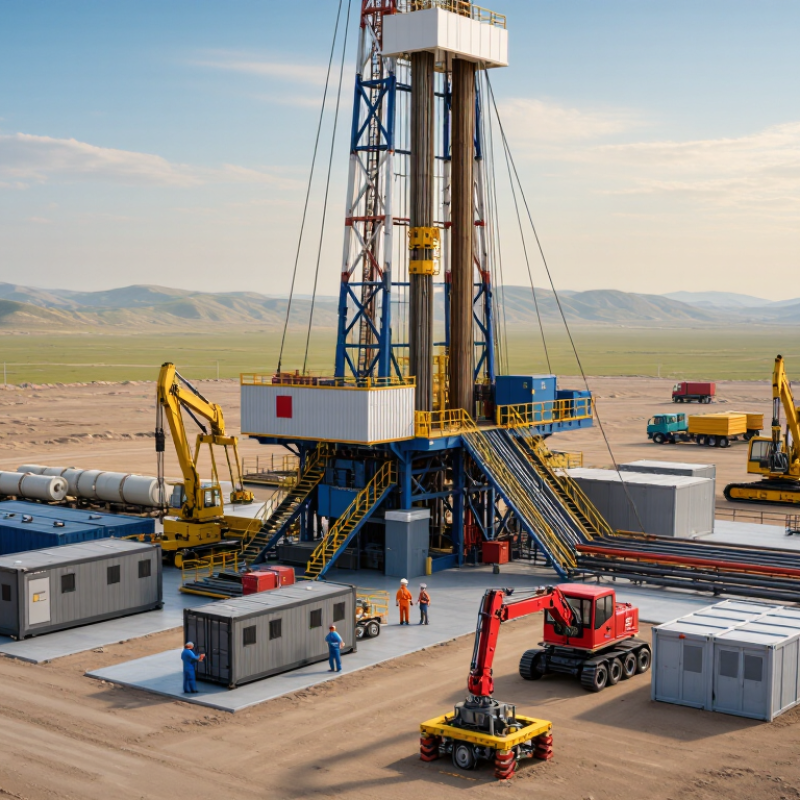
China’s Oil Drilling Equipment Manufacturing Industry
China Top 10 Oil Drilling Machine Manufacturers?
China’s oil drilling equipment manufacturing industry has expanded from basic fabrication to integrated engineering. Manufacturers now produce drilling rigs, mud pumps, rotary tables, control systems, and supporting tools. Their workshops often combine large-scale machining with computer-aided design and automated welding.
A reliable manufacturer should show more than a polished catalog. Buyers need traceable materials, pressure-test records, dimensional reports, and clear maintenance procedures. On the factory floor, details matter. A properly aligned gearbox can reduce vibration during long drilling cycles. Accurate welding can also protect critical joints under repeated stress.
Field experience remains important. Equipment may perform well in a test yard but struggle with dust, heat, cold, or difficult transport routes. Experienced suppliers usually adapt power systems, cooling units, and control panels to local conditions. Certification is useful, but it should support practical evidence, not replace it.
A Top 10 evaluation should examine production capacity, engineering depth, inspection discipline, delivery reliability, and after-sales support. Price alone can hide future costs. No factory gets every detail right, and smaller design adjustments may still be overlooked. Buyers should request factory audits, sample documents, spare-parts plans, and realistic commissioning schedules before making a decision.
How the Top 10 Chinese Oil Drilling Machine Manufacturers Are Selected
China Top 10 Oil Drilling Machine Manufacturers?
Selecting China’s top 10 oil drilling machine manufacturers requires more than checking online rankings. The process combines field experience, engineering review, and verifiable business evidence. A capable machine should perform steadily in dust, heat, uneven ground, and long operating cycles. Selection begins with product quality, not advertising volume.
Reviewers examine drilling depth, torque, power systems, mobility, and maintenance access. They inspect factory controls, welding quality, component traceability, and final testing records. Safety documentation and compliance with applicable national and international standards also matter. Independent customer references can reveal details that brochures often miss, such as hydraulic leaks, spare-part delays, or difficult controls.
After that, manufacturers are compared through a clear scoring model. Product reliability, technical support, delivery consistency, customization ability, and warranty response receive separate scores. Site visits and video inspections add useful evidence, but they cannot replace long-term operating data. A ranking is never perfect. Some performance records remain confidential, while customer feedback may be incomplete or biased. Reviewers should disclose these limits instead of presenting every result as absolute fact. The final list should reflect documented capability, practical user experience, and responsible manufacturing practices rather than market popularity alone.
China Top 10 Oil Drilling Machine Manufacturers
How the Top 10 Chinese Oil Drilling Machine Manufacturers Are Selected
The shortlist is evaluated through a weighted screening framework covering technical capability, safety and compliance, equipment reliability, service support, customization, delivery capacity, and environmental performance. The percentages represent evaluation weights rather than the performance of any individual company or brand.
Profiles of China’s Leading Oil Drilling Machine Manufacturers
China’s leading oil drilling machine manufacturers serve a large and technically demanding market. The National Bureau of Statistics reported China’s crude oil output at about 213 million tonnes in 2024. Imports exceeded 550 million tonnes, sustaining demand for drilling and well-service equipment.
Public rankings remain imperfect. Procurement records often mix manufacturers, contractors, and trading companies. Still, several manufacturer profiles appear consistently. Large state-linked equipment groups usually offer complete land rigs, automated pipe-handling systems, and long-term field support. Their advantage is integration. Private engineering companies often focus on compact workover rigs, mud pumps, top drives, and customized control systems. These firms can respond faster, although service coverage may vary outside China. Export-oriented manufacturers increasingly design equipment for desert heat, cold regions, and unstable power supplies.
Field evidence matters more than brochures. Buyers should examine lifting cycles, pump efficiency, spare-part response, and documented maintenance hours. API specifications and ISO quality systems provide useful reference points, but certification alone cannot prove dependable performance. Baker Hughes’ international rig reports show that drilling activity changes sharply with oil prices and regional investment. Manufacturers with modular designs may therefore reduce idle equipment costs. That sounds practical.
The IEA’s Oil 2024 report expects global oil demand to approach 105.4 million barrels per day by 2030. Chinese suppliers are responding with digital monitoring, variable-frequency drives, and lower-emission power packages. Yet data transparency remains uneven, and some published capacity figures need independent verification. Reliability is still measured in the field.
China Top 10 Oil Drilling Machine Manufacturers? - Profiles of China’s Leading Oil Drilling Machine Manufacturers
| Rank | Anonymous Manufacturer Profile | Primary Equipment Focus | Representative Drilling Depth | Typical Rated Power | Drive and Mast Configuration | Common Compliance Standards | Typical Application | Customization Capability |
|---|---|---|---|---|---|---|---|---|
| 1 | Profile A | Land drilling rigsAC electric rigs | 3,000–9,000 m | 1,000–3,000 hp | AC variable-frequency drive; telescopic or box-type mast | API Spec 4F; API Spec 7K; API Spec 16C options | Deep onshore oil and gas wells | High; mud systems, drawworks and substructures can be configured by well program |
| 2 | Profile B | Truck-mounted rigsTrailer rigs | 1,000–4,000 m | 350–1,200 hp | Diesel-mechanical or diesel-electric; hydraulic raising mast | API Spec 4F; ISO 9001 production systems | Mobile onshore exploration and development wells | Medium to high; transport layout, mast height and pumping package options |
| 3 | Profile C | Workover rigsService rigs | 1,500–5,000 m | 350–1,000 hp | Hydraulic or mechanical drawworks; self-propelled or skid-mounted | API Spec 4F; API Spec 7K; applicable pressure-control requirements | Well servicing, completion and pulling operations | High; tubing equipment, power systems and well-control packages |
| 4 | Profile D | Trailer-mounted rigsCluster-well systems | 2,000–6,000 m | 750–2,000 hp | AC or mechanical transmission; cantilever or box mast | API Spec 4F; API Spec 8C lifting equipment options | Multi-well pads and remote oilfield locations | High; walking systems, skidding bases and compact substructures available |
| 5 | Profile E | Hydraulic drilling rigsGeothermal rigs | 1,500–5,000 m | 500–1,500 hp | Hydraulic top drive; crawler, truck or skid-mounted platform | API Spec 4F; ISO 9001; regional pressure-vessel requirements | Geothermal wells, water wells and shallow-to-medium oil wells | High; rotary table, top drive, air drilling and mud drilling packages |
| 6 | Profile F | Diesel-electric rigsAutomated drawworks | 3,000–7,000 m | 1,000–2,500 hp | AC-SCR hybrid systems; automated pipe-handling options | API Spec 4F; API Spec 7K; API Spec 8C options | High-utilization land drilling projects | High; control systems, power management and solids-control integration |
| 7 | Profile G | Small rotary rigsCore drilling equipment | 300–2,000 m | 100–600 hp | Hydraulic or mechanical rotary drive; truck, crawler or skid base | ISO 9001; CE documentation for applicable export configurations | Mineral exploration, shallow oil and gas, geological investigation | Medium; drilling tools, pumps and chassis configurations |
| 8 | Profile H | Directional drilling rigsHorizontal drilling units | 1,000–4,500 m | 500–1,500 hp | Hydraulic top drive; automated pipe-handling and mud-pump options | API Spec 4F; API Spec 7K; equipment-specific HSE documentation | Directional wells, sidetracks and horizontal development wells | High; rotary steerable support, mud systems and data-monitoring interfaces |
| 9 | Profile I | Modular rigsSkid-mounted systems | 2,000–6,000 m | 750–2,000 hp | Electric or hydraulic drive; modular mast and split skids | API Spec 4F; API Spec 7K; ISO 9001 quality systems | Refinery-area wells, constrained sites and pad drilling | Very high; transport dimensions, skidding and power packages are configurable |
| 10 | Profile J | Workover and pulling unitsWell-service equipment | 800–3,500 m | 250–800 hp | Hydraulic or mechanical drawworks; truck-mounted or trailer-mounted | API Spec 4F; API Spec 7K; local road-transport regulations | Routine maintenance, completion and intervention work | Medium to high; injector heads, winches, pumps and control cabins |
Key Technologies and Product Categories in Oil Drilling Machinery
China’s oil drilling machinery sector is moving beyond steel-heavy rigs toward integrated, data-driven systems. The key categories include land rigs, top drives, mud pumps, blowout preventers, solids-control units, tubular-handling tools, and directional-drilling equipment. Each category affects drilling speed, well control, maintenance, and worker safety.
Automation is becoming central. Variable-frequency drives can improve motor control and reduce energy waste during changing loads. Measurement-while-drilling and logging-while-drilling tools provide formation data before the drillstring returns to surface. Rotary steerable systems support accurate well paths, especially in extended-reach wells. Digital monitoring also helps detect vibration, pressure changes, and pump inefficiency. However, software cannot repair weak maintenance practices. That lesson is often overlooked.
The IEA’s World Energy Investment 2024 estimated global upstream oil and gas investment at about 570 billion dollars, around 7% higher than in 2023. This spending supports demand for efficient, reliable equipment, but budgets remain sensitive to oil prices. The SPE technical literature repeatedly links drilling performance with hydraulics, torque management, and real-time downhole data. These findings should guide equipment comparisons, not promotional claims.
Tips: Check rated pressure, lifting capacity, operating temperature, certification records, spare-parts access, and local service capability. Request field data from comparable wells. A polished specification sheet is not enough.
How to Compare Chinese Oil Drilling Machine SuppliersWinvalid
China Top 10 Oil Drilling Machine Manufacturers?
Comparing Chinese oil drilling machine suppliers requires more than checking rankings or online prices. Review their manufacturing experience, equipment range, and project records in similar geological conditions. Ask for technical drawings, drilling depth data, engine details, and documented performance results. A professional supplier should explain limitations clearly, not promise impossible output.
Factory verification matters. Check machining areas, assembly lines, quality-control procedures, and spare-parts storage. Request inspection reports for key components, including the mast, hydraulic system, rotary head, and mud pump. Confirm whether testing follows recognized industry standards. Speak with recent customers about delivery accuracy, operator training, warranty response, and maintenance costs. A polished website can still hide weak after-sales support. No comparison is perfect. Local geology may change the final choice.
Tips: Compare total ownership cost, not only the purchase price. Include shipping, installation, spare parts, fuel use, and technician support. Request a clear contract with specifications, acceptance tests, delivery dates, and warranty terms. Ask suppliers to identify unavailable components honestly. That answer may reveal more than a sales presentation. Also, inspect the machine through live video or an independent party before payment. Small details matter, such as hose protection, control-panel labeling, and access to daily service points.
(780) 669-9420