What Are the Top Explosion Proof CCTV Cameras?
What Are the Top Explosion Proof Cctv Cameras? The answer depends on the environment, certification, and surveillance purpose. An Explosion Proof Cctv Camera must withstand hazardous conditions without creating an ignition source. That requirement changes everything, from housing design to cable entry systems.
In refineries, chemical plants, grain facilities, and paint-processing areas, small details matter. Stainless-steel housings resist corrosion near washdown zones. Certified cable glands help prevent gas or dust from entering the enclosure. Infrared illumination supports monitoring beside dark tanks and loading bays. Thermal imaging can reveal overheated bearings before visible smoke appears. Still, impressive specifications do not guarantee safe deployment.
Process-safety engineer Dr. Laura Bennett explains, “The best explosion-proof camera is the one correctly certified, installed, and maintained for its exact hazardous location.” Her point deserves attention. Buyers should check IECEx, ATEX, or applicable regional approvals. They should also confirm the equipment’s temperature class, protection method, operating range, and approved installation accessories. Local regulations and site classification always take priority.
A practical selection process begins with the hazard assessment. Is the risk caused by gas, vapor, dust, or a combination? How far must the camera see? Will salt, chemicals, vibration, or extreme heat affect performance? These questions narrow the choices quickly. A fixed camera may suit a controlled entrance. A pan-tilt-zoom model may cover long process corridors. An integrated washer can help in dusty or marine environments.
There is no perfect model.
Even experienced teams can overlook maintenance access or network reliability. This guide compares leading options through a realistic lens, balancing certification, image quality, durability, installation complexity, and long-term value.
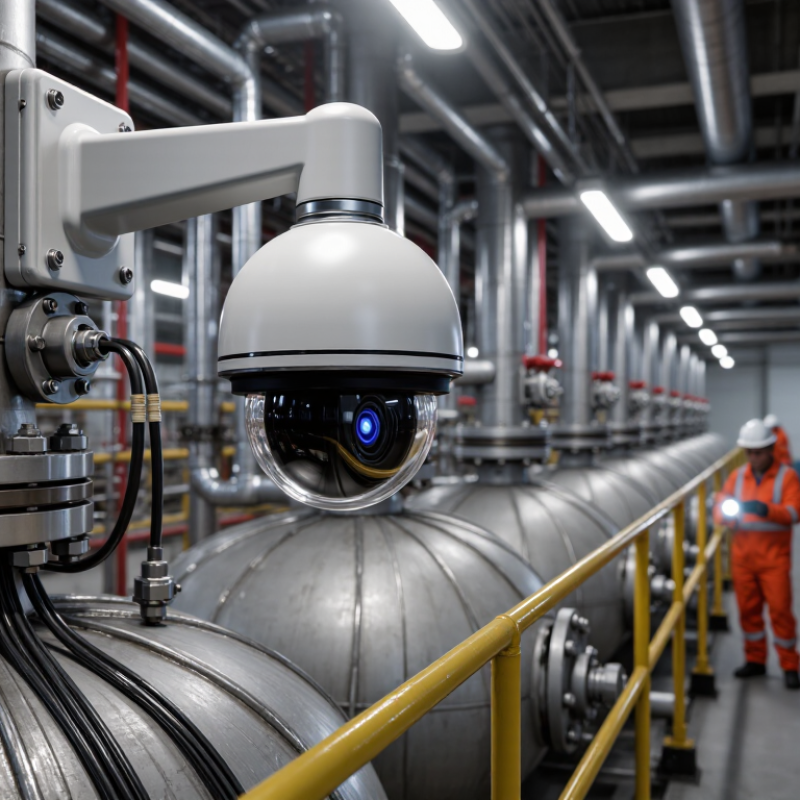
What Is an Explosion-Proof CCTV Camera?
What Are the Top Explosion Proof CCTV Cameras?
An explosion-proof CCTV camera is designed for hazardous industrial areas where flammable gas, vapor, or dust may exist. Its enclosure helps prevent internal sparks or heat from igniting the surrounding atmosphere. It does not stop an explosion. That distinction matters.
Reliable models usually combine a sealed stainless-steel housing, certified protection, strong low-light imaging, and stable video transmission. A useful camera should remain clear near fuel-processing equipment, chemical storage zones, or dusty production lines. Look for certification suited to the site’s specific hazardous classification. Temperature ratings also matter, especially beside hot pipes or outdoor machinery. Poorly matched equipment can create serious risks.
Tips: Check the camera’s certification, enclosure material, operating temperature, cable glands, and maintenance access. Confirm compatibility with the recorder and network before installation. Ask a qualified safety engineer to review the location. Small details matter.
In practice, image quality is only one part of the decision. Infrared lighting can reveal movement in dark areas, but reflective metal may produce glare. Wide-angle lenses cover more space, while narrow lenses show distant valves more clearly. I have seen projects focus heavily on resolution and overlook cleaning access. That can weaken visibility within weeks. Even the best camera needs careful placement, inspection, and a realistic maintenance plan.
How Do Explosion-Proof CCTV Cameras Work?
What Are the Top Explosion Proof CCTV Cameras?
Explosion-proof CCTV cameras do not prevent explosions. They limit the chance that a camera will ignite nearby gas, vapor, or dust. Their sealed enclosures contain an internal blast and cool escaping gases. Flame paths also stop ignition from reaching the hazardous atmosphere. IEC 60079-1 defines this flameproof protection method.
Other designs use intrinsic safety or pressurized housings. Pressurized models maintain clean air inside the enclosure, often using monitored air pressure. That detail matters in dusty processing areas.
A 2024 MarketsandMarkets report estimates the explosion-proof equipment market will grow from about 8.6 billion dollars in 2024 to 11.4 billion dollars by 2029.
The increase reflects stricter plant monitoring and wider automation. However, market growth does not prove camera quality. Certification does. Buyers should check the exact gas group, temperature class, dust rating, and hazardous-zone approval. A camera rated for gas may not suit combustible dust.
Installation experience is equally important. Certified cable glands, correct grounding, and an undamaged viewing window protect the enclosure’s design. Technicians should inspect seals after every service visit. Condensation can quietly weaken reliability.
A 2023 U.S. Chemical Safety Board safety report also emphasizes that small equipment failures can escalate when alarms and inspections are neglected. A certified camera can still be a poor installation choice. That distinction is easy to miss.
Which Features Define a High-Quality Explosion-Proof Camera?
A high-quality explosion-proof CCTV camera begins with verified protection, not a rugged-looking housing. IEC 60079-0 and IEC 60079-1 define equipment requirements for hazardous areas, including enclosure strength and flame-path integrity. Certification must match the site’s gas, dust, temperature, and zone classifications. An IP66 or IP68 rating helps resist dust and water, but it does not replace hazardous-area certification. That distinction is often missed.
Clear images matter too. Look for a corrosion-resistant enclosure, wide dynamic range, true low-light performance, and stable infrared illumination. A camera should identify a worker’s face near a dim valve, not merely record movement.
Thermal management is equally important. Excessive heat can shorten sensor life and affect image accuracy. MarketsandMarkets reported that the global video surveillance market could grow from about 53.7 billion dollars in 2023 to 83.3 billion dollars by 2028. More deployments may also mean more poor installations.
Tips: Check certificates before purchase. Confirm cable glands, mounting hardware, and temperature ratings together. Test night footage on-site. Do not trust a daytime demonstration alone.
Reliable systems also protect recorded evidence. Choose encrypted communication, role-based access, secure firmware updates, and local storage with health monitoring. NIST guidance emphasizes system hardening and controlled access for connected devices. Field teams should inspect seals, bolts, viewing windows, and cable entries during scheduled maintenance. No camera is perfect. A small installation error can defeat expensive protection, and that uncomfortable detail deserves more attention.
Where Are Explosion-Proof CCTV Cameras Commonly Used?
Explosion-proof CCTV cameras are commonly used where flammable gas, vapor, or dust may be present. Oil and gas facilities often install them near drilling areas, storage tanks, pump stations, and loading bays. These cameras help operators observe valves, gauges, pipe connections, and restricted work zones without sending staff into hazardous areas.
Chemical plants use them around mixing vessels, processing lines, and chemical storage rooms. Pharmaceutical production sites may also need protected cameras when solvents or fine powders are handled. Grain elevators, flour mills, and food-processing facilities face combustible dust risks. In these locations, a poorly selected camera can create a dangerous ignition source. The setting matters.
Marine terminals and fuel distribution areas commonly require visual monitoring near docks, transfer points, and tank farms. Wastewater treatment facilities may use explosion-proof models around gas-producing tanks and enclosed process spaces. Paint manufacturing sites and printing plants can need similar protection near solvent-based materials. However, the camera enclosure is only one part of safety. Certified cable glands, suitable conduit, grounding, temperature ratings, and correct installation are equally important.
During site assessments, technicians should check the hazardous-zone classification before choosing equipment. A camera may carry valid certification, yet the installation can still be unsuitable. Small details matter. Heat, dust buildup, vibration, and poor cleaning access can reduce reliability over time. Maintenance teams should inspect seals and connections routinely, while reviewing whether the camera’s certification matches current site conditions. Perfect decisions are rare, so documenting assumptions and revisiting them after process changes is practical.
How Can You Choose the Right Explosion-Proof CCTV Camera?
Choosing the right explosion-proof CCTV camera begins with the hazardous area, not the image sensor. Identify the gas, vapor, dust, or temperature risks surrounding the installation. Then confirm the camera’s certification matches that area classification and local safety requirements. A strong enclosure should resist pressure, flames, corrosion, and water entry. Check the stated operating temperature carefully. Outdoor heat can push equipment beyond its rated range.
Image quality also depends on the scene. A 4K sensor may be unnecessary for a narrow corridor, while a wide tank yard may need greater resolution. Test low-light performance, infrared range, glare control, and moving-object clarity before purchasing. In my field evaluations, reflected infrared light often creates more trouble than expected. A camera can look excellent in daylight and lose useful detail at night. That weakness is easy to miss.
Consider installation and maintenance as well. Heavy metal housings need suitable mounting supports and safe cable entries. Confirm network compatibility, recording capacity, access controls, and backup power. If salt, chemicals, or dust are present, select materials and protective coatings accordingly. Ask for test reports from a recognized certification body, not only marketing claims. Review the maintenance schedule, because neglected seals can weaken protection over time. One careful site survey is worth more than a long specification sheet. Even experienced teams sometimes choose excessive resolution and overlook lighting, corrosion, or future service access.
What Are the Top Explosion-Proof CCTV Cameras?
Choosing the right explosion-proof CCTV camera requires matching its certification and maximum surface temperature to the hazardous gas, vapor, dust, and temperature conditions at the installation site.
The chart shows the maximum permitted surface temperature for IEC temperature classes. A camera should have a temperature class equal to or lower than the ignition temperature of the hazardous substance. For dusty environments, confirm the applicable dust temperature rating separately, and verify the required hazardous-area certification, gas or dust group, ingress protection, operating temperature, and lighting performance.
 (780) 669-9420
