
Blog
- Home
- Blog
How to Choose the Right Valve Engineering Partner?
Choosing a valve engineering partner is not a paperwork exercise. It affects process safety, uptime, maintenance costs, and the quality of every valve delivered. Grand View Research estimated the global industrial valves market at about $79.6 billion in 2023, underscoring the scale of the sector and the importance of sound technical decisions. Market size alone, however, cannot tell buyers whether a supplier can handle their operating conditions.
Look closer. A capable partner should explain material selection, pressure and temperature limits, applicable standards, testing methods, and traceability in terms your team can verify. Ask how design changes are controlled and how failures are investigated. Request relevant project references, inspection records, and clear answers about lead times. A polished brochure is not proof.
Quality expert W. Edwards Deming said, “Quality is everyone’s responsibility.” Though not a valve-industry specialist, his principle applies: engineering quality depends on shared accountability, from design review to final inspection. Compare potential partners against the same technical requirements, and check whether their evidence matches your application. One uncomfortable question matters: are you choosing the strongest engineering fit, or simply the easiest quote to approve? This guide introduces practical criteria for making that choice with greater confidence.
Defining the Scope and Requirements of Your Valve Project
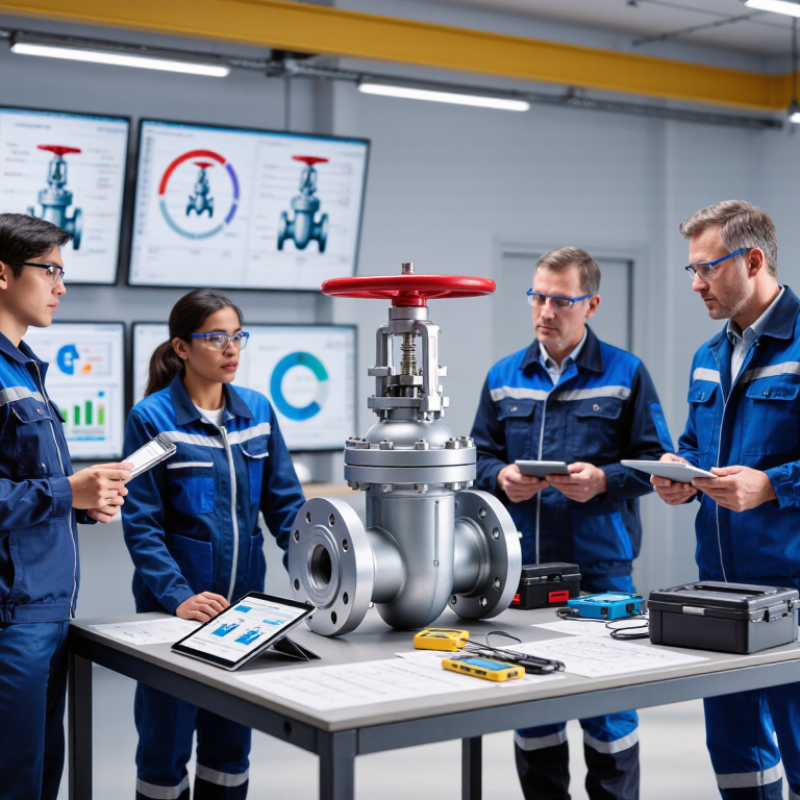
A strong valve project brief starts with the process, not a product shortlist. Record the fluid, operating pressure, temperature range, flow rate, and expected cycling frequency. Include the normal conditions and the extremes, such as cold start-up or a sudden pressure drop. These details shape the valve type, materials, actuator, and testing plan. Small omissions matter. A temperature range copied from an old drawing may not reflect today’s operating cycle.
Ask your engineering partner to document assumptions and identify missing data before proposing a design. Specify connection standards, leakage limits, control response, corrosion concerns, and required inspection records. For steam systems, the U.S. Department of Energy’s Improving Steam System Performance guide notes that well-managed steam-system improvements can often reduce energy use by 10% or more. That figure applies to system improvements, not to a valve alone, but it shows why operating context belongs in the scope.
Provide site constraints too: available installation clearance, actuator power, access for maintenance, and whether shutdown time is limited. A lesson learned: teams sometimes define the valve carefully, then leave commissioning responsibilities vague. That gap can cost time. Agree on acceptance criteria, documentation, and who verifies performance before procurement begins.
Identifying Essential Engineering Capabilities and Industry Experience
Choosing a valve engineering partner starts with the work the valve must perform. A supplier should understand pressure, temperature, fluid properties, flow rate, and operating cycles. Ask how engineers turn these conditions into a valve specification. A useful answer refers to real design decisions, not broad claims. For example, they may explain how seat materials, actuator sizing, or body geometry affect performance in a specific service.
Look for capabilities across design, testing, manufacturing, and field support. Can the team review drawings, assess failure reports, and explain test results in clear terms? Request examples from industries with similar operating demands, such as water treatment, energy, or chemical processing. Relevant experience matters, but it should be supported by documented projects, inspection records, and practical lessons learned. Ask what went wrong and how the team responded. That can reveal more than a polished case study.
Communication is an engineering capability, too. A dependable partner flags missing data, states assumptions, and records changes before they become costly surprises. Check whether test plans reflect your actual operating conditions, rather than relying on generic procedures. Visit the facility if possible; observe how components are identified, measured, and handled. No partner will anticipate everything. I have seen even careful teams miss small details, such as an unclear instrument connection on a drawing. A direct review process helps catch them early.
Assessing Quality Systems, Compliance, and Technical Resources
A valve engineering partner should be able to show how quality is built into daily work, not just describe a quality policy. Ask how design changes are reviewed, materials are traced, and inspection results are recorded. A sample inspection report can reveal whether measurements are clear and linked to specific components. Look for documented procedures, calibrated instruments, and a practical process for handling nonconforming parts. Details matter.
Compliance needs careful discussion before a project begins. Share the intended service conditions, destination, and applicable industry requirements, then ask how the partner verifies that its designs and documentation match them. Request evidence such as material certificates, pressure-test records, and configuration histories where relevant. Do not assume a certificate covers every valve or operating condition. Even a capable supplier may need time to confirm an unusual specification.
Technical resources are just as important as paperwork. Ask whether engineers can review pressure, temperature, fluid compatibility, and cycle requirements with your team. A useful partner will explain trade-offs in plain language and flag missing information, rather than promise a quick answer to every question. Check access to testing equipment, engineering software, and experienced personnel. One weakness in my own evaluations: I have sometimes focused too much on impressive equipment and too little on who interprets the results. Ask to meet the people who will support the project after design approval.
How to Choose the Right Valve Engineering Partner? - Assessing Quality Systems, Compliance, and Technical Resources
| Assessment Dimension | What to Assess | Evidence to Request | Strong Indicators | Warning Signs |
|---|---|---|---|---|
| Quality management system | Whether processes for design, purchasing, production, inspection, and corrective action are documented and controlled. | Current quality-management-system certificate, audit scope, quality manual or process overview, and examples of corrective-action records. | A current ISO 9001 certificate covering the relevant activities; traceable records; evidence that nonconformities are investigated and verified after correction. | Expired or out-of-scope certification, undocumented processes, or repeated issues with no evidence of root-cause analysis. |
| Product and industry standards | Experience with the standards and valve types applicable to the intended service and project specification. | A standards compliance matrix, sample inspection and test plans, and documentation identifying the applicable edition of each standard. | Clear, project-specific mapping to applicable requirements, such as API 6D for pipeline valves or ASME B16.34 for valve design and pressure-temperature ratings, when specified. | Generic claims of compliance without identifying product scope, standard edition, or supporting design and test records. |
| Regulatory compliance | Whether products can meet destination-market requirements and any applicable pressure-equipment, materials, or environmental rules. | Applicable conformity documents, declarations, technical-file index, and the proposed conformity-assessment route for the equipment category. | Requirements are confirmed against the actual market, product category, and project scope; documentation is available to support the required conformity process. | A blanket compliance claim with no assessment of jurisdiction, equipment classification, or required documentation. |
| Design and engineering capability | Ability to translate operating conditions into a suitable valve design, materials selection, and documented design verification. | Engineering workflow, design calculations or verification summaries, material-selection rationale, and change-control records. | Engineers review pressure, temperature, fluid, corrosion, cycling, and installation conditions before recommending a design; assumptions and revisions are recorded. | A recommendation based only on nominal size or pressure class, without reviewing service conditions or documenting design assumptions. |
| Manufacturing and process control | Control of critical operations, including machining, joining, heat treatment, coating, assembly, and subcontracted work where applicable. | Process-control plans, qualified procedure records where required, supplier-control procedures, and production inspection records. | Critical processes are identified, acceptance criteria are defined, and outsourced activities are subject to documented approval and verification. | Unclear responsibility for subcontracted processes or inability to connect production records to the finished valve. |
| Inspection and testing | Whether inspection and testing plans address the specified acceptance criteria and are performed with suitable, maintained equipment. | Sample pressure-test reports, inspection and test plans, instrument calibration records, and personnel qualification records when applicable. | Test methods, pressures, durations, acceptance criteria, and results are recorded against the applicable specification; measuring equipment has current calibration traceability. | Test certificates omit key parameters or results, or calibration status cannot be verified. |
| Material traceability | Ability to trace pressure-retaining and other specified components to material records and inspection results. | Sample material test certificates, heat or lot traceability records, and a demonstration of how records connect to a finished-valve serial or batch number. | Traceability is maintained through manufacturing and final documentation; material grades and test results match the purchase specification. | Records cannot be linked to the supplied valve, or substitutions are made without documented approval. |
| Special-service competence | Relevant capability for services such as fugitive-emission control, fire-safe design, sour service, or low-temperature operation, when required. | Service-specific test reports, material controls, qualification records, and confirmation of the applicable project acceptance criteria. | Claims are supported by tests or qualifications relevant to the offered design and configuration; applicable standards, such as ISO 15848-1 for fugitive-emission type testing, are identified when specified. | General claims are presented as proof for every configuration, without scope, test conditions, or qualification limits. |
| Technical support and lifecycle service | Availability of technical assistance for specification review, commissioning, troubleshooting, maintenance, and spare parts. | Support scope, escalation contacts, service response commitments, maintenance guidance, and parts-identification documentation. | Responsibilities and response expectations are agreed in advance; manuals and parts information are specific to the supplied configuration. | Support availability is unclear, or maintenance information does not correspond to the delivered product. |
| Documentation and change control | Completeness, consistency, and revision control of drawings, certificates, manuals, and approved deviations. | Sample manufacturing data book index, document register, revision history, and deviation or concession workflow. | Documents are indexed, reviewed, and linked to the purchase order and product identity; changes and deviations receive documented approval. | Conflicting revisions, missing records, or undocumented changes to materials, design, or scope. |
Note: Confirm the applicable standards, regulatory obligations, and acceptance criteria against the project specification, valve type, service conditions, and destination market. Certifications and test qualifications should be checked for current validity and relevant scope.
Comparing Communication, Project Support, and Total Costs
How to Choose the Right Valve Engineering Partner?
Comparing Communication, Project Support, and Total Costs
A capable valve engineering partner makes technical details visible early. Ask how they confirm operating pressure, temperature, fluid properties, and control requirements. Request a sample calculation or marked-up datasheet, not only a polished proposal. Clear answers matter. If assumptions change, the partner should record the revision and explain its effect on selection, lead time, and price. That small paper trail can prevent a costly mismatch at installation.
Project support should continue after the quotation. Check who handles drawing reviews, material questions, inspection records, and commissioning issues. The Project Management Institute’s Pulse of the Profession 2020 reported that organizations wasted 11.4% of investment because of poor project performance. This is not a valve-specific figure, but it underlines why defined responsibilities and timely decisions matter. Ask for a named technical contact and realistic response times. Even good teams miss things sometimes; the question is how they catch and correct them.
Compare total cost, not just unit price. Include engineering hours, testing, delivery, installation changes, maintenance access, and expected operating conditions. The U.S. Department of Energy notes that pumping systems use nearly 20% of global electricity demand, with some industrial facilities allocating 25–50% of energy use to pumping. A valve does not determine that whole bill, but pressure losses and poor sizing can affect system demand. Ask partners to state their assumptions and show the trade-offs. The cheapest option may be right. It may also be a false saving.
Verifying References and Selecting the Best-Fit Engineering Partner
A valve engineering partner should prove performance, not merely promise it. Ask for references from projects with similar fluids, pressure ranges, temperatures, and operating cycles. Then speak directly with the client. Did the valves meet specification? Were drawings and material certificates complete? How quickly did the engineer respond when site conditions changed? One polished case study is useful; several verifiable references are stronger.
The U.S. Department of Energy’s Improving Pumping System Performance: A Sourcebook for Industry reports that pumping systems use nearly 20% of global electricity and 25–50% of energy in some industrial facilities. This is not a valve-specific figure, but it shows why sound sizing and system coordination matter. Request documented calculations, test records, and examples of how the partner addressed pressure loss or cavitation. Check whether the proposed team includes engineers who will remain involved after design approval. A capable firm can still be a poor fit if communication is slow or its experience does not match your service conditions.
Tips: Call two recent references, not just the contacts selected for a presentation. Ask what went wrong, how it was resolved, and whether delivery matched the agreed schedule. Review one redacted drawing package and its revision history. Small gaps matter. And be cautious: a neat dossier cannot replace candid answers from people who operated the equipment.
Related Posts
-
10 Essential Tips for Maintaining Your Working Valve Efficiency?
-
Top Working Valve Technologies to Watch in 2026
-

Top 10 Best Valve Selection Tips for Optimal Performance?
-
Top Flow Valves Manufacturers for Global Buyers
-

Top Benefits of Engineered Valves for Industrial Applications
-
Top Gate Valve Types Explained for Your Industrial Needs?
(780) 669-9420